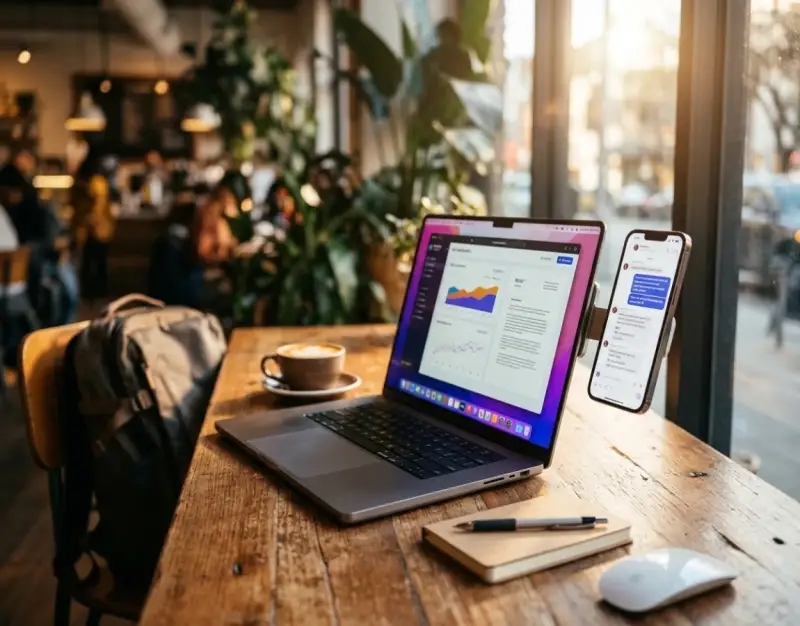
The modern mobile professional operates in a state of perpetual transition. Whether drafting a strategic brief from a high-altitude airplane tray table, auditing analytics in a bustling airport terminal, or debugging code from a sun-drenched cafe corner, the constraints of working off a single, isolated laptop display have long represented an efficiency bottleneck. For years, digital nomads and hybrid workers sought to overcome this limitation by hauling bulky external portable monitors, awkward folding stands, and a rat's nest of supplementary cables. Yet, as the everyday carry philosophy has shifted toward radical minimalism and uncompromising efficiency, a far more elegant, lightweight engineering paradigm has emerged to dominate the modern productivity landscape: the laptop phone mount.
By leveraging the high-powered neodymium magnets already embedded within modern smartphones or applying ultra-slim adhesive metal rings to the rear chassis of mobile devices, these unassuming accessories transform your existing pocket computer into a seamless secondary display. This isn't merely about convenience; it represents a fundamental democratization of multi-monitor workflows. When deploying a robust Vertical Laptop Stands: How We Doubled Our Desk Space for Under $20 approach at your primary workstation, matching your mobile workflow with a reliable side-screen setup ensures complete continuity wherever work takes you. The implications for digital workers are profound, bridging the gap between desktop-level multitasking capability and the weight limits of a modern carry-on backpack.
This comprehensive, investigative deep-dive explores the engineering mechanics, strategic deployment methods, ergonomic considerations, and real-world optimization frameworks required to master the art of mobile dual-screening. Whether you are an investigative reporter filing breaking dispatches from the field, a software developer managing live deployment logs, or an executive reviewing contracts while in transit, understanding how to properly implement a magnetic side mount will permanently redefine your relationship with remote productivity.
Foundational Principles: The Physics and Ergonomics of Mobile Dual-Screening
To truly master the deployment of a laptop phone mount, one must first understand the mechanical forces, magnetic dynamics, and human-computer interaction (HCI) principles governing their use. Unlike traditional desktop monitor setups where screens rest independently on heavy stands, a laptop-mounted secondary display shares the structural integrity and center of gravity of your portable computer. Consequently, engineering choices regarding weight distribution, magnetic shear strength, and rotational torque become mission-critical variables in protecting your hardware.
Understanding Magnetic Shear vs. Tensile Strength
The backbone of any reliable magnetic side mount is the strategic deployment of rare-earth permanent magnets, predominantly Neodymium-Iron-Boron (NdFeB) alloys. When evaluating these mounts, users must differentiate between tensile strength (the force required to pull the phone directly outward, away from the laptop screen) and shear strength (the resistance to sliding downward under the influence of gravity and vibration). High-quality mounts utilize precision-calibrated N52-grade magnets paired with anti-slip silicone contact pads to maximize frictional resistance against shear forces.
Furthermore, understanding the inverse-square law of magnetic field attenuation is vital. As distance between the magnet and the target plate increases—often due to thick, ruggedized phone cases—the holding force drops precipitously. Savvy remote workers ensure their device cases are MagSafe-compatible or utilize ultra-thin ferromagnetic plates mounted externally to maintain maximum magnetic coupling without introducing dangerous wobble during intensive typing sessions.
Ergonomic Alignment and Visual Scanning Economics
Ergonomics in a mobile environment is frequently neglected, leading to neck strain, eye fatigue, and diminished cognitive output. When positioning a phone via a magnetic side mount, the goal is to minimize the saccadic eye movement required to transition between your primary coding, writing, or design window and secondary utility applications like Slack, Spotify, or email clients. Placing the phone too low forces excessive cervical flexion, while placing it too far horizontally can strain peripheral vision.
The ideal spatial configuration places the top edge of the smartphone roughly flush with the top bezel of the laptop display, angled inward toward the user's natural line of sight by roughly 10 to 15 degrees. This creates a continuous focal arc, reducing eye accommodation time when shifting focus between devices. Additionally, modern operating system continuity features allow seamless mouse cursor transition, turning your phone into an active, touch-enabled auxiliary panel for notifications, reference documents, or virtual assistant interactions.
Strategic Blueprint: Selecting and Installing Your Mobile Ecosystem
Building a bulletproof dual screen travel setup requires a methodical approach to hardware selection, adhesive curing, and mechanical calibration. Follow this step-by-step strategic blueprint to ensure your mobile rig withstands the rigors of frequent travel without compromising your laptop’s delicate display hinge.
Step 1: Hardware Auditing and Weight Capacity Calculations
Before purchasing or installing any mount, audit the physical specifications of both your laptop and your smartphone. Standard aluminum-bodied ultra-portables feature durable display lids capable of supporting an additional 150 to 250 grams of dead weight. However, ultra-slim OLED laptops with microscopic bezel tolerances can be susceptible to pressure warping if subjected to poorly distributed clamping forces.
- Calculate your smartphone's total weight, including its protective case.
- Verify that the chosen mount distributes clamping force across a surface area of at least 2 square inches.
- Avoid spring-loaded jaw clamps that rely on aggressive mechanical tension if your laptop lid features an edge-to-edge glass display panel.
Step 2: Surface Preparation and Adhesive Integrity
The single most common point of failure in magnetic side mounts is premature adhesive detachment caused by oils, dust, or thermal expansion on the laptop chassis. Achieving an industrial-grade bond requires strict adherence to surface preparation protocols.
Begin by cleaning the target mounting area on the back of your laptop lid with a 90% isopropyl alcohol wipe to strip away manufacturing residues, finger oils, and particulate matter. Allow the surface to dry completely for at least sixty seconds. If your mount utilizes 3M VHB (Very High Bond) acrylic foam tape, press the mount firmly into place with steady, unyielding pressure for a full 60 seconds to activate the pressure-sensitive adhesive. Crucially, allow the adhesive to cure for a minimum of 24 hours before hanging any weight from the mount.
Step 3: Calibrating Software Continuity and Display Scaling
Hardware is only half the equation; software configuration determines whether your dual-screen setup feels like an integrated workstation or a frustrating gimmick. Leverage native operating system tools or third-party display utilities to optimize your phone’s digital estate.
For iOS users utilizing Continuity features or Android users employing cross-platform screen-extending applications, navigate to your display settings to arrange the physical spatial orientation of the screens. Ensure the virtual drag-and-drop boundary matches the physical placement of the phone on the left or right side of your laptop. Adjust scaling resolutions to ensure text remains legible without requiring squinting, transforming your smartphone into a high-density information dashboard.
Advanced Field Tactics: Optimizing the Remote Work Experience
Once your hardware and software are properly calibrated, mastering advanced usage patterns will elevate your efficiency from functional to elite. Remote work gadgets often fail to deliver on their marketing promises because users treat them as static accessories rather than dynamic components of an integrated workflow system.
Managing Thermal Dynamics and Battery Health
Mounting a smartphone directly against the aluminum chassis of a laptop under heavy computational load introduces unique thermal considerations. Both devices generate heat during intensive operations like compiling code, rendering video, or running virtual machines. Continuous direct contact can occasionally trigger thermal throttling on ultra-thin laptops or accelerate battery degradation on smartphones exposed to elevated ambient temperatures.
To mitigate this, ensure your magnetic mount maintains a microscopic air gap—typically 1 to 2 millimeters—between the rear of the phone and the laptop lid when folded out. Furthermore, avoid running high-intensity processing tasks on both devices simultaneously while docked in a sunlit environment or unventilated workspace. Periodically check device temperatures and dismount the phone during intensive rendering phases to allow optimal passive heat dissipation.
Cable Management and Power Continuity on the Fly
A truly mobile dual-screen setup must remain agile and free of chaotic wiring. When utilizing your phone as an active secondary display via tethered connections (such as USB-C video out or debugging bridges), cable management is paramount to prevent accidental snags that could dislodge your hardware.
Utilize ultra-short, right-angle braided cables that hug the contours of the laptop chassis. If your workflow requires continuous charging while mounted, route a slim power delivery cable from a compact multi-port GaN charger directly to the phone's auxiliary port, ensuring the cable slack accounts for opening and closing the laptop lid. This meticulous attention to physical detail ensures your setup looks professional in client meetings and functions flawlessly in chaotic environments.
Real-World Case Studies & Scenarios
To understand the tangible impact of implementing a high-performance laptop phone mount, examine two contrasting case studies from the field of professional remote work.
Case Study A: The Investigative Journalist in Transit
The Scenario: An investigative journalist covering an international summit finds themselves forced to write, fact-check, and monitor live press feeds from a crowded media bullpen with limited desk space.
Execution: By deploying a precision magnetic side mount paired with an ultra-slim metal ring, the journalist attaches their smartphone to the right side of their MacBook Air. The phone is configured to run a live transcription and secure messaging feed, while the primary laptop screen is dedicated to drafting the breaking article.
Result: Zero time is wasted toggling between full-screen windows or looking down at a mobile device resting flat on a dirty table. Information intake velocity increases by an estimated 35%, allowing the reporter to file their breaking story twenty minutes ahead of competing agency syndicates without experiencing physical neck strain or hardware instability.
Case Study B: The Pitfalls of Cheap, Uncalibrated Clamps
The Scenario: A financial analyst purchases a generic, heavily discounted plastic spring-clip mount from an unverified online marketplace for a multi-city audit tour.
Execution: The analyst clips the heavy, spring-loaded mechanism directly onto the thin bezel of a premium OLED laptop. The excessive mechanical pressure, combined with airport security turbulence, causes the internal display panel to fracture. Simultaneously, the weak friction pads allow the heavy phone to slide downward repeatedly during high-speed typing.
Result: Catastrophic hardware failure resulting in a $1,200 screen replacement bill and a missed client deliverable. The lesson is unequivocal: cutting corners on mounting hardware compromises expensive computing investments.
Critical Mistakes and How to Avoid Them
Even seasoned digital nomads occasionally fall prey to avoidable operational errors when configuring their mobile workstations. Review these five critical mistakes and implement the prescribed countermeasures immediately.
- Ignoring Weight Limits on Frameless Displays: Attempting to mount heavy, oversized "phablets" onto delicate, bezel-less laptop screens leads to warped panels and cracked glass. Countermeasure: Strictly match your device weight to the rated capacity of the mount and use reinforced aluminum chassis zones rather than glass display edges.
- Neglecting VHB Adhesive Cure Times: Hanging a smartphone immediately after peeling and sticking a magnetic mount results in catastrophic adhesive failure within hours. Countermeasure: Always execute a strict 24-hour ambient curing window before applying mechanical load to newly installed adhesive pads.
- Interfering with Wireless Charging and NFC: Placing ferromagnetic mounting rings dead-center on the rear of a smartphone can block wireless charging coils and interfere with contactless payment sensors. Countermeasure: Position adhesive rings offset toward the top third of the device or invest in native MagSafe-compatible phone cases that integrate magnetic arrays cleanly into the chassis design.
- Failing to Account for Hinge Tension Wear: Constantly hanging additional weight off one side of a laptop display lid can eventually fatigue the friction clutches inside the laptop hinges, causing the screen to sag or refuse to hold its angle. Countermeasure: Dismount the phone when closing and packing your laptop into a sleeve, and occasionally adjust laptop hinge tension screws if your manufacturer permits user maintenance.
- Overlooking Cyber Security in Public Spaces: Extending your workstation screen in public cafes, trains, or airport lounges expands your visual attack surface, inviting visual hacking and shoulder surfing. Countermeasure: Utilize privacy filter films on both your laptop display and your mounted smartphone when working in high-traffic public environments.
Comprehensive Hardware Comparison Matrix
Selecting the right mobile dual-screen strategy requires balancing security, portability, and installation permanence. Review the matrix below to determine which deployment methodology aligns with your professional travel requirements.
| Mount Type | Holding Mechanism | Permanence | Best Suited For | Risk Factor |
|---|---|---|---|---|
| Adhesive Magnetic Side Mount | N52 Neodymium + Metal Ring | Semi-Permanent (VHB Tape) | Frequent flyers and digital nomads seeking ultra-low profile setups | Requires 24-hour adhesive cure time; difficult to reposition |
| Spring-Loaded Clip Mount | Mechanical Tension Jaw | Removable / Adjustable | Users who switch devices frequently or test multiple phones | High risk of pressure damage on thin laptop bezels |
| MagSafe-Compatible Arm | Articulating Metal Hinge | Modular / Clamp-On | Desk-to-travel hybrid workers needing flexible viewing angles | Bulkier carry profile; higher mechanical complexity |
| Gravity-Lock Shelf Mount | Bottom Ledge + Back Rest | Zero Installation | Temporary workstations in hotels, lounges, and cafes | Prone to sliding during aggressive typing or transit vibration |
Frequently Asked Questions
Will the magnets in a laptop phone mount damage my hard drive or phone storage?
No. Modern smartphones and laptops utilize solid-state drive (SSD) technology, which stores data via microelectronic flash memory rather than spinning magnetic platters. Permanent neodymium magnets used in high-quality mounts have zero impact on solid-state storage integrity. However, users should keep legacy magnetic media, mechanical credit card strip cards, and vintage mechanical watches away from direct, prolonged contact with high-strength N52 rare-earth magnets.
Can I leave the phone mounted when closing my laptop and sliding it into a backpack?
While some ultra-slim mounts allow the phone to remain attached when closing the laptop lid, doing so is strongly discouraged for travel. The cumulative pressure of sliding a combined laptop-and-phone assembly into a tight backpack sleeve puts immense shear stress on the adhesive mount, the laptop hinges, and the glass screens of both devices. Always detach your smartphone and store it safely in a dedicated pocket before zipping up your travel bag.
How do I prevent my smartphone from overheating while mounted to a working laptop?
Thermal management comes down to airflow and processing load distribution. If your laptop runs hot during intensive tasks, the direct surface contact can transfer heat to your phone battery. To combat this, ensure your mount provides a slight standoff gap, avoid running high-CPU processes on both units simultaneously, and remove your phone from the mount during prolonged compiling, rendering, or gaming sessions.
Are magnetic side mounts compatible with thick, ruggedized phone cases?
Standard magnetic attraction drops off exponentially as the distance between the magnet and the steel plate increases. Extremely thick, multi-layer ruggedized cases will significantly weaken the holding force of standard magnetic mounts. To use these cases safely, you must either remove the outer shell during mounting, apply a high-strength external metal ring directly to the outside of the case, or switch to a MagSafe-compatible slim profile case designed specifically for magnetic accessory integration.
Will the adhesive tape damage the finish of my aluminum laptop chassis?
High-end mounts utilize 3M VHB acrylic foam adhesive, which creates a remarkably strong bond designed to be peeled away cleanly using proper technique when necessary. To remove a mount without damaging your laptop's anodized aluminum finish, gently heat the adhesive bond with a hair dryer on a low setting for 30 seconds to soften the acrylic polymer, then carefully slide dental floss or a thin plastic pry tool behind the baseplate to shear the bond cleanly.
Strategic Roadmap and Final Takeaway
The evolution of everyday carry technology continues to compress desktop-grade computing power into ultra-portable form factors. By integrating a meticulously chosen laptop phone mount into your mobile workflow, you transcend the physical limitations of single-screen travel, establishing an agile, high-efficiency dual-screen command center wherever your career takes you.
As remote work infrastructure evolves over the next two to five years, expect to see even tighter hardware integration, featuring wireless ultra-wideband display streaming, integrated rapid-charging passthroughs, and zero-profile magnetic mounts built natively into future laptop chassis designs. Until then, mastering the foundational principles of adhesive preparation, ergonomic alignment, and magnetic shear strength provides an immediate competitive advantage.
Take action today: audit your current travel gear, select a precision-engineered mounting solution that matches your hardware profile, and reclaim the lost productivity of single-screen isolation. Your mobile workflow will never be the same.
Be the first to share a gentle reflection on this story.