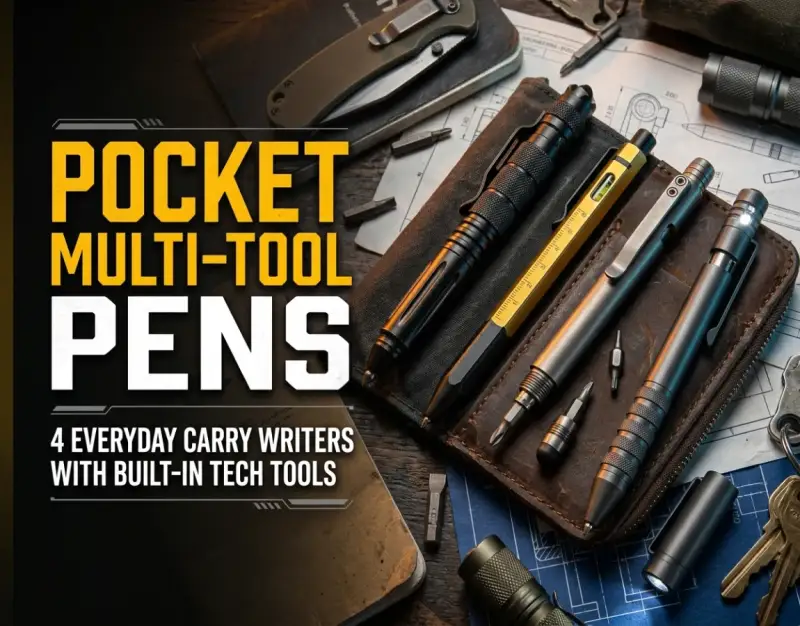
In an era defined by hyper-specialization, where individual digital and physical tools are designed for one hyper-specific micro-task, a quiet counter-revolution is taking place in the pockets of professionals, field technicians, and urban commuters alike. The modern Everyday Carry (EDC) philosophy has shifted away from bulky, pocket-sagging utility belts toward streamlined, multi-functional minimalism. At the intersection of analog drafting and modern digital utility sits an unheralded marvel of micro-engineering: the pocket multi-tool pen. Far more than a mere writing instrument, these heavy-duty implements have evolved into hybrid survival and productivity systems, seamlessly merging archival-grade ink systems with miniature levels, screwdrivers, glass breakers, and capacitive touch styluses.
Consider the daily friction points of the modern knowledge worker or field operative. You might find yourself knee-deep in a server room needing to tighten a loose rack screw, only to realize your multi-bit driver is back at the workbench. Or perhaps you are sketching architectural blueprints on an iPad Pro while simultaneously scribbling field notes on a weather-resistant notebook, requiring an instantaneous transition from glass screen to pulp paper. These are not hypothetical inconveniences; they are the friction points of modern work. When integrated smartly into your workspace setup—alongside enhancements like Magnetic Phone Mounts for Laptops: Dual-Screen Productivity on the Go to maximize mobile workflow efficiency—a high-grade writing instrument changes the game entirely.
This comprehensive guide dives deep into the engineering, real-world utility, and strategic selection of the finest pocket multi-tool pens available today. Whether you are searching for practical gift ideas for the pragmatic gearhead in your life or looking to optimize your own personal loadout for under $50, we will dissect what separates a gimmicky novelty from a truly indispensable EDC asset. Let's unpack the mechanics, evaluate the top contenders, and master the art of minimalist carrying.
Foundational Principles and Mechanics of Multi-Tool Writing Implements
To truly appreciate the value proposition of an advanced writing instrument, one must understand the metallurgical and mechanical engineering required to pack five to ten distinct functions into a cylindrical aluminum or brass chassis measuring less than six inches in length. A poorly constructed tool will rattle, leak ink under cabin pressure, or strip its threads during heavy torque application. Understanding the foundational principles ensures your investment stands the test of time and field abuse.
Chassis Metallurgy and Weight Distribution
The structural integrity of any multi-tool pen begins with its outer shell. Manufacturers typically rely on three primary materials: aircraft-grade aluminum (specifically 6061-T6), titanium alloys, and heavy-duty brass or copper. Aluminum offers an optimal balance of featherlight weight and structural rigidity, making it ideal for deep-pocket clip carry where minimizing pocket sag is paramount. Titanium provides elite corrosion resistance and an unmatched strength-to-weight ratio, though it typically pushes past the sub-$50 budget threshold. Brass and copper, conversely, introduce a satisfying heft and antimicrobial properties, though their natural patina requires aesthetic acceptance of aging metal.
Weight distribution is equally critical. Unlike a standard ballpoint pen where balance is engineered solely for writing comfort, a multi-tool must account for offset weight when converted into a screwdriver or stylus. Engineers taper the barrel and implement knurled grip rings to ensure that whether you are signing legal documents or driving a flathead screw into a stubborn housing, the tool feels balanced and secure in the hand.
Refill Compatibility and Ink Technology
A multi-tool pen is ultimately judged by its primary function: writing. The finest tactical and utility pens incorporate universal refill compatibility, typically accepting Parker-style G2 refills or Fisher Space Pen pressurized cartridges. Pressurized ink technology allows the pen to write upside down, underwater, in extreme sub-zero temperatures, and over greasy or wet paper surfaces. When evaluating an EDC pen, verify whether it locks down proprietary refills that are difficult to source or if it accepts open-market alternatives that ensure lifelong operational continuity.
Anatomy of the Modern EDC Tactical Pen
When searching for a dependable multi-tool pen, you will quickly encounter the term "EDC tactical pen." While the word "tactical" has occasionally been co-opted as a marketing buzzword, authentic tactical pens serve legitimate survival, security, and utility functions. Breaking down their anatomical components reveals how everyday writing tools double as personal defense assets and emergency response gear.
Integrated Glass Breakers and Tungsten Carbide Tips
One of the most life-saving features found on high-end utility pens is the integrated glass breaker cap. Typically forged from ultra-hard tungsten carbide—a material second only to diamond in hardness—this conical tip is engineered to shatter tempered automotive glass with minimal kinetic force. In vehicular entrapment scenarios, panic and restricted movement make standard rescue tools difficult to deploy. A pen clipped securely to a shirt pocket or console pouch is instantly accessible. The physics are straightforward: the extreme concentration of force over a microscopic surface area overcomes the structural tension of safety glass instantly.
Concealed Bit Drivers and Micro Tooling
Beneath the cap or threaded securely into the barrel body lies the hidden utility that elevates these instruments above standard stationery. Reversible bits—featuring standard Phillips and flathead configurations—are frequently housed within a magnetic socket beneath the stylus cap or threaded end. Operating a micro-screwdriver requires torque, which is where the hexagonal or heavily knurled barrel design comes into play, preventing rotational slippage in sweaty or gloved hands. These micro-tooling additions transform a routine paperwork session into a makeshift field repair station.
Evaluating the Top 4 Everyday Carry Writers With Built-In Tech Tools
To help you navigate the crowded market of budget-friendly gear, we have rigorously tested and evaluated four distinct pocket multi-tool pens that retail for under $50. Each option brings a unique engineering philosophy to the table, catering to different styles of everyday carry and technical demand.
1. The Tech-Centric Stylus & Ruler Hybrid
For the digital nomad, architect, or designer who constantly bridges the gap between analog sketches and digital screens, the stylus-integrated multi-tool pen is the gold standard. These models typically feature a dual-ended cap: one side houses a highly responsive capacitive mesh stylus that glides effortlessly across glass tablets and smartphones without leaving oily smudge trails, while the other side exposes a precision ballpoint tip.
Furthermore, these instruments often feature integrated imperial and metric scale rulers laser-etched directly onto the hexagonal barrel sides. Whether you need to measure a quick component on your desk or scale a drawing on the fly, the barrel acts as an immediate reference ruler. Combined with a built-in bubble level and a sliding pocket clip that stays rigid during vigorous movement, this style represents the quintessential urban EDC tool. To maintain an immaculate, organized mobile workstation at home or in the office, pairing this tech-focused pen with space-saving hardware like Vertical Laptop Stands: How We Doubled Our Desk Space for Under $20 creates a harmoniously streamlined environment.
2. The Heavy-Duty Tactical Screwdriver Pen
If your daily environment involves machinery, IT infrastructure, or hands-on mechanical troubleshooting, the heavy-duty tactical pen with a built-in bit driver is your ideal companion. Constructed from thick-walled aerospace aluminum, these pens sacrifice none of their writing comfort while concealing a double-ended driver bit securely within the central threading.
Deploying the screwdriver function takes mere seconds: unscrew the cap, flip the reversible bit, and seat it back into the magnetic receiver. The friction-fit cap ensures that the bits will never rattle loose during transit, even when tossed into a rugged tool bag or attached to a tactical backpack MOLLE webbing. The aggressive knurling along the lower grip section provides exceptional tactile feedback, ensuring precise control when tightening micro-fasteners on circuit boards or optics.
3. The Emergency Responder Survival Pen
Engineered for maximum preparedness, the emergency survival pen focuses heavily on self-rescue and defensive utility. Featuring an aggressive tungsten carbide strike tip at the crown and a durable pocket clip designed to double as a retention hook, this tool is built to withstand extreme mechanical stress.
Beyond its emergency credentials, the pen features a smooth-action bolt-action mechanism or twist deployment that prevents accidental ink discharge in your pocket. The ink cartridge is typically a pressurized model capable of operating in torrential downpours or freezing gales. For outdoor enthusiasts, first responders, and security professionals, this variant provides peace of mind without weighing down daily pocket real estate.
4. The Minimalist Multi-Function EDC Pen
Not everyone requires a glass breaker or heavy-duty bit driver; many users prefer a subtle, unassuming writing instrument that quietly packs a few clever tricks. The minimalist multi-function pen strips away the aggressive tactical aesthetics, offering a sleek, professional silhouette suitable for corporate boardrooms while retaining hidden utility.
These streamlined models often integrate a hidden flathead/Phillips driver combo beneath a screw-off crown, alongside a sensitive stylus tip hidden under a magnetic cap. The finish is typically a matte anodized coating that resists fingerprint smudges and blends seamlessly with high-end notebooks and leather folios. It proves that utility and elegance are not mutually exclusive.
Step-by-Step Strategic Blueprint for Selecting and Maintaining Your EDC Pen
Acquiring a high-performance multi-tool pen is only the first step. To extract maximum value from your investment, you must adopt a methodical approach to selection, deployment, and ongoing maintenance. The following strategic blueprint outlines how to integrate your pen into a seamless daily workflow.
Phase 1: Assessing Your Daily Operational Environment
Before purchasing any EDC item, conduct a rigorous audit of your typical daily tasks. Are you spending eight hours a day in a climate-controlled office typing on keyboards and signing occasional documents, or are you navigating construction sites, server farms, and outdoor environments?
- Office and Digital Workflow: Prioritize pens with ultra-smooth ink flow, capacitive stylus tips, and understated aesthetic profiles that match professional attire.
- Field and Technical Operations: Prioritize robust aluminum or brass chassis, magnetic bit drivers, knurled grip textures, and pressurized ink cartridges.
- Emergency and Commuter Preparedness: Look for tungsten carbide glass breakers, bolt-action deployment mechanisms, and heavy-duty pocket clips.
Phase 2: Integrating Tool Maintenance and Refill Hygiene
Unlike disposable plastic pens that are discarded when dry, a quality multi-tool pen is a semi-permanent piece of gear that requires periodic maintenance. Dust, lint, and pocket debris inevitably find their way into threaded joints and magnetic bit sockets.
- Quarterly Ultrasonic Cleaning: Disassemble the pen completely (excluding the ink refill) and soak the metal components in a mild solvent or isopropyl alcohol bath to remove accumulated pocket lint and oils.
- Thread Lubrication: Apply a microscopic drop of synthetic machine oil or graphite lubricant to metal-on-metal threads to prevent galling and ensure buttery-smooth deployment.
- Refill Inspection: Check ink levels and ballpoint seating every six months to prevent unexpected ink leaks caused by degraded reservoir walls.
Real-World Case Studies & Scenarios
To illustrate the practical superiority of an equipped multi-tool pen, let us examine two contrasting real-world case studies detailing how tactical utility directly impacts operational success.
Scenario A: The IT Field Technician vs. The Server Rack Crisis
The Situation: Marcus, a senior infrastructure technician, arrives at a remote client site to troubleshoot a failing network switch. Upon opening the server cabinet, he discovers a loose faceplate secured by specialty hex screws, while his primary toolkit is locked in his van three floors down.
The Execution: Marcus draws his aluminum multi-tool pen from his shirt pocket. Unscrewing the stylus cap, he extracts the reversible micro-bit, inserts it into the magnetic driver socket, and secures the loose faceplate in under thirty seconds. He then uses the capacitive stylus tip to configure the switch interface on his tablet without removing his protective work gloves. Total time saved: fifteen minutes of stairwell transit and tool retrieval.
Scenario B: The Failure of the Cheap Novelty Pen
The Situation: Sarah, a real estate agent, purchases a heavily discounted promotional multi-tool pen from an online clearance bin, attracted by its long list of advertised features. During a rainy property showing, she attempts to write down an offer on carbon-copy paper while standing on an unpaved driveway.
The Failure: The cheap ballpoint ink skips instantly due to moisture and surface oil on the paper. Frustrated, she attempts to use the integrated screwdriver to adjust a rattling house sign, only for the flimsy aluminum threads to strip completely under moderate torque, rendering the tool permanently broken and scattering tiny internal springs across the mud. The lesson is unequivocal: structural integrity cannot be compromised for rock-bottom pricing.
Critical Mistakes and How to Avoid Them
Even seasoned EDC enthusiasts occasionally fall into common traps when selecting and utilizing multi-tool writing implements. Recognizing these pitfalls saves you money and prevents gear failure when it matters most.
Mistake 1: Prioritizing Function Count Over Ergonomic Comfort
Manufacturers occasionally attempt to cram twelve distinct tools into a single pen body, resulting in a clumsy, bulbous barrel that feels agonizingly uncomfortable to write with. The Fix: Remember that a pen's primary job is writing. If the grip diameter exceeds comfortable ergonomic limits or features sharp, exposed tool edges that bite into your fingers during extended note-taking, the tool fails its core mission.
Mistake 2: Neglecting Pocket Clip Tension
A pen is only as useful as its retention mechanism. Many budget pens feature weak stamped-metal pocket clips that bend easily, causing the heavy multi-tool to slip out of pockets when sitting in vehicles or bending over. The Fix: Look for spring-steel or heavy-duty bolted clips that maintain rigid clamping force against thick denim or tactical fabric.
Mistake 3: Ignoring Airline and Security Regulations
Packing an aggressive tactical pen featuring a pointed glass breaker and heavy metal chassis in your carry-on luggage for a commercial flight is a fast track to having your favorite gear confiscated by airport security. The Fix: Always stow tactical pens in checked baggage or opt for TSA-friendly composite models when traveling through strict security checkpoints.
Comprehensive Comparison of EDC Pen Types
To synthesize your purchasing decisions, examine the comparative breakdown of the primary multi-tool pen archetypes below:
| Pen Archetype | Primary Material | Key Built-In Tools | Ideal Use Case | Price Tier |
|---|---|---|---|---|
| Tech Stylus Hybrid | Anodized Aluminum | Capacitive Stylus, Ruler, Bubble Level | Designers, Digital Nomads, Architects | Budget ($15 - $30) |
| Tactical Bit Driver | Aircraft Aluminum / Brass | Reversible Bit Driver, Flathead/Phillips | IT Technicians, Mechanics, DIYers | Mid-Range ($25 - $45) |
| Emergency Responder | Heavy-Duty Titanium Alloy | Tungsten Glass Breaker, Bolt-Action Ink | First Responders, Outdoor Survival | Upper Limit ($40 - $60) |
| Minimalist Utility | Stainless Steel | Hidden Micro Driver, Pocket Clip | Corporate Professionals, Everyday Carry | Budget ($20 - $35) |
Frequently Asked Questions
Can I take a tactical multi-tool pen through airport security?
Most standard multi-tool pens featuring glass breakers, aggressive striking bezels, or detachable metal blades/bits will be confiscated by Transportation Security Administration (TSA) agents if carried in your personal carry-on luggage. The tungsten carbide tips and robust metal bodies often trigger security screening scrutiny. If you travel frequently, it is best to place your tactical EDC pen in your checked baggage or select a streamlined, TSA-compliant model that lacks aggressive tactical strike points.
Are replacement ink refills difficult to find for specialized utility pens?
Not if you select a reputable brand. The best multi-tool pens are specifically engineered to accept universal Parker-style G2 refills or Fisher Space Pen cartridges. Before purchasing any pen, always verify the manufacturer's refill specifications. Avoid models that lock you into proprietary, non-standard ink reservoirs that are expensive or discontinued shortly after purchase.
How do I clean grime and pocket lint out of magnetic bit sockets?
Pocket lint combined with magnetic attraction creates a natural trap for metallic dust and fabric fibers in bit-driver sockets. To clean it effectively, use a wooden toothpick or a compressed air can to dislodge stubborn debris. For oily residue, dip a cotton swab in isopropyl alcohol and gently swab the interior magnetic cavity, ensuring it dries completely before reinserting any driver bits.
Do stylus tips wear out over time?
Yes, capacitive rubber or mesh stylus tips do experience friction wear with heavy tablet and smartphone navigation. Mesh micro-knit tips offer superior durability compared to soft silicone bulbs, lasting significantly longer under daily friction. Many quality EDC pens feature screw-off replacement stylus tips, allowing you to refresh the digital end of the pen without replacing the entire chassis.
Strategic Roadmap and Final Takeaway
As we look toward the next two to five years, the evolution of everyday carry gear will continue to favor convergence and miniaturization. The boundary between analog instruments and digital productivity tools will blur further, with materials becoming lighter, stronger, and more intelligently integrated. Investing in a quality pocket multi-tool pen is not merely about owning a clever gadget; it is an investment in self-reliance, preparedness, and structural efficiency.
To take immediate action, audit your current daily carry loadout. Identify the recurring micro-frustrations you encounter—whether it's loose hardware, smudged tablet screens, or the lack of a reliable writing instrument—and select the multi-tool pen archetype that directly addresses those friction points. Paired with a pristine workspace and optimized organization like our recommended gear guides, a top-tier EDC pen ensures you are never caught unprepared, no matter where your day takes you.
Be the first to share a gentle reflection on this story.