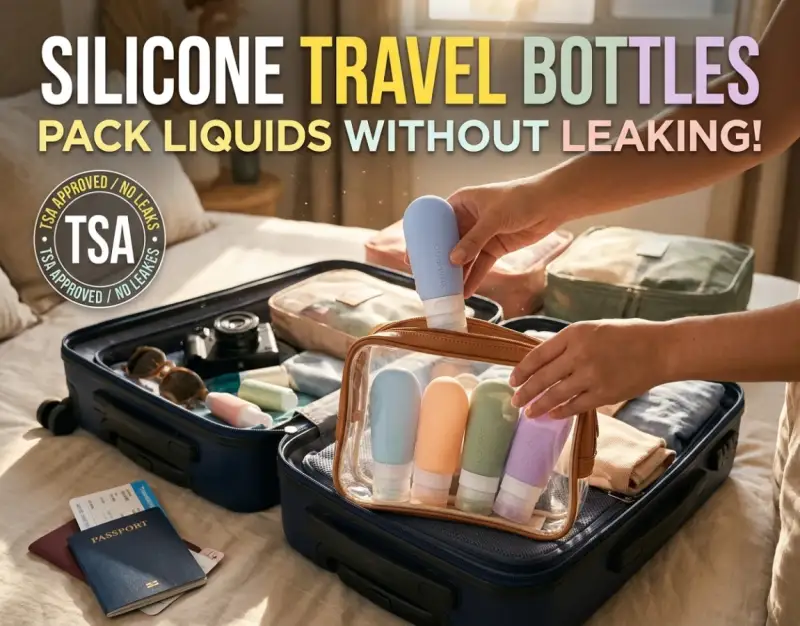
Imagine standing at the security checkpoint, watching anxiously as your carefully packed carry-on bag is pulled aside for secondary screening. A rogue drop of high-end facial serum has ruptured inside your luggage, soaking your clothes, destroying boarding passes, and turning the start of your dream vacation into an administrative nightmare. Seasoned globetrotters know that packing liquids for air travel is an exercise in managing physics, pressure differentials, and material science. Every flight subjects your luggage to fluctuating cabin pressures, rough baggage handling, and thermal variations that can transform even the most secure liquid container into a leaking hazard.
For decades, travelers relied on rigid, brittle plastic bottles that cracked under pressure, leaked around poorly threaded caps, or forced users to violently squeeze out the last drops of product. Fortunately, the emergence of high-grade silicone travel bottle sets has fundamentally revolutionized how we pack liquid toiletries. These soft-squeeze, flexible containers absorb impact, conform to tight packing spaces, and offer innovative anti-drip valve technologies designed to withstand the rigors of modern transit. Choosing the right gear requires moving beyond basic aesthetics to understand polymer chemistry, TSA regulations, and the architecture of a truly functional travel kit.
This comprehensive guide explores everything you need to know about selecting, packing, and maintaining silicone travel bottle sets. Whether you are planning a fast-paced business trip or a multi-week international adventure, mastering your liquid packing strategy ensures your gear stays pristine, your belongings remain protected, and your journey starts without a hitch. As you streamline your packing routine, remember that efficiency extends beyond toiletries; optimizing your entire travel workflow with practical tools—such as equipping your digital kit with 10 Clever Tech Gadgets Under $30 That Fix Everyday Frustrations—creates a seamless, stress-free travel experience from departure to arrival.
Understanding the Physics of Travel Leaks
To prevent leaks, you must first understand why they happen. During commercial flights, cargo holds and passenger cabins experience significant pressure changes. As an aircraft ascends to cruising altitude, atmospheric pressure drops, causing air trapped inside rigid containers to expand. If a bottle is filled to the absolute brim, this expanding air forces the liquid past the container seal, resulting in a messy blowout upon opening or, worse, inside your luggage.
Silicone travel bottles mitigate this phenomenon through material flexibility. Unlike rigid plastics or glass, food-grade silicone acts as a flexible expansion chamber. When internal pressure rises, the walls of the bottle slightly bulge rather than forcing the fluid past the valve mechanism. Furthermore, premium silicone sets feature multi-layer leakproof walls that resist permeation from oils, alcohols, and aggressive cosmetic formulations, maintaining structural integrity across hundreds of flights.
The Chemistry of Food-Grade Silicone vs. Cheap Polymers
Not all silicone is created equal. Cheaply manufactured travel containers often incorporate plasticizers and fillers that degrade when exposed to essential oils, high-strength sunscreens, or heavy conditioners. Over time, these chemicals cause the silicone to become tacky, brittle, or chemically reactive, leaching odors into your products and compromising the seal.
Investing in 100% platinum-grade or food-grade silicone ensures thermal stability, chemical inertness, and long-term durability. These high-end polymers resist mold growth, do not leach harmful BPA or phthalates into your skincare products, and withstand repeated sterilization cycles without losing their elasticity or sealing properties.
How Cabin Pressure Differentials Affect Your Toiletries
Commercial aircraft cabins are pressurized to altitudes roughly equivalent to 6,000 to 8,000 feet above sea level. This drop in barometric pressure is the primary culprit behind leaking bottles. When you land and open your luggage, the pressure differential normalizes, often drawing residual liquid out of poorly designed spouts.
To combat cabin pressure issues, always leave a small pocket of air (about 10% to 15% of total volume) inside your silicone travel bottle. This headspace gives expanding air room to move without forcing liquid against the valve. Additionally, storing your toiletries in an upright position during transit drastically reduces the likelihood of fluid making contact with the closure mechanism.
TSA Compliance and Airport Security Regulations
Navigating airport security efficiently requires strict adherence to international aviation security standards. In the United States, the Transportation Security Administration (TSA) enforces the well-known 3-1-1 rule for carry-on liquids, gels, aerosols, creams, and pastes. Understanding how this rule applies to your silicone bottles prevents confiscation at the checkpoint.
The 3-1-1 rule mandates that all liquids must be in containers of 3.4 ounces (100 milliliters) or smaller, all containers must fit comfortably inside a single clear, quart-sized, resealable plastic bag, and each passenger is limited to one bag. Choosing silicone travel bottles specifically stamped with "3.4 oz" or "100ml" capacity markers removes guesswork for security agents and speeds up your screening process.
Mastering the Quart-Sized Bag Strategy
The quart-sized bag is often the weakest link in a traveler's packing armor. Flimsy sandwich bags tear easily, lack structural support, and make organizing multiple bottles frustrating. Upgrading to a reinforced, clear travel organizer bag with a sturdy zipper and waterproof seams provides a durable, reusable alternative that complies fully with TSA regulations.
When packing your bag, arrange your silicone bottles side-by-side rather than stacking them vertically. This flat profile minimizes bulk, allows security scanners to clearly image the contents without requiring manual bag checks, and ensures your quart bag zips smoothly without straining the seams.
Labeling and Capacity Markers for Rapid Identification
A major frustration among frequent travelers is grabbing the wrong bottle mid-shower because every container looks identical. Premium silicone travel bottle sets solve this with integrated or rotatable ID windows (showing labels like "Shampoo," "Conditioner," "Lotion," or "Soap") and clear capacity stamps.
When selecting your set, look for bottles featuring color-coding systems or textured labeling rings. Being able to distinguish your cleanser from your toothpaste in a dimly lit hotel bathroom prevents costly mix-ups and streamlines your daily grooming routine.
Anatomy of a Truly Leakproof Silicone Travel Bottle
Market shelves are flooded with cheap travel containers that promise leakproof performance but fail under real-world conditions. A truly leakproof silicone bottle relies on an integrated system of mechanical design features working in tandem to lock liquids inside.
The cornerstone of any reliable bottle is its valve system. Cross-slit silicone valves (similar to those found on travel mugs or baby bottles) allow fluid to exit only when gentle external pressure is applied, automatically sealing shut the moment you release your grip. Combined with a secondary screw cap, this dual-protection mechanism provides absolute peace of mind.
The Role of Multi-Tier Leakproof Collars
The threading where the cap meets the bottle body is the most common point of failure for liquid leakage. Superior silicone bottles incorporate a multi-tier anti-leak collar system featuring internal sealing rings and deep, precise threads that bite securely into the collar.
Furthermore, look for bottles designed with a wide-mouth opening. Wide mouths not only make refilling and cleaning effortless—eliminating the need for awkward funnels—but they also allow manufacturers to mold thicker, more robust sealing surfaces around the bottle neck, preventing warping and thread stripping over years of use.
Suction Cups and Mounting Innovations
Many modern silicone travel bottles feature detachable suction cups embedded in their outer spines or integrated hanging loops. These features are not merely cosmetic; they solve a practical travel pain point: lack of counter space in cramped hotel, hostel, or cruise ship bathrooms.
A strong suction cup allows you to securely mount your shampoo or shower gel directly onto tiled shower walls or glass partitions. This keeps your products within arm's reach, off dirty shower ledges, and prevents bottles from tipping over and spilling during use.
Step-by-Step Strategic Blueprint for Packing Liquids
Executing a flawless liquid-packing routine requires methodical preparation. Follow this step-by-step blueprint to ensure every trip is free from spills, leaks, and security delays.
Step 1: Inventory and Audit Your Toiletries
Before throwing products into bottles, conduct a comprehensive audit of your hygiene and cosmetic needs based on trip duration and destination climate. Separate daily essentials (such as contact lens solution, prescription creams, and face wash) from items you can purchase locally or that your hotel provides.
Calculate exact usage quantities to avoid overpacking. For a seven-day trip, you rarely need more than two ounces of shampoo or conditioner. Transferring only what you need reduces the total weight of your luggage and keeps your quart-sized bag well under capacity limits.
Step 2: Clean, Sanitize, and Dry Your Silicone Bottles
Never refill travel bottles without thoroughly cleaning them first. Residual product buildup can harbor bacteria, alter the chemical composition of your new cosmetics, or prevent the bottle valves from sealing correctly.
Wash your silicone bottles with warm water, mild dish soap, and a bottle brush designed to reach the base. For stubborn oils or scented residues, rinse the interior with a mixture of warm water and white vinegar, then allow the bottles to air-dry completely in a dust-free environment before refilling.
Step 3: Transfer Products Using Proper Technique
Use a small culinary funnel or a cosmetic syringe to transfer liquids into wide-mouth silicone bottles. Pour slowly to avoid creating air bubbles or spilling product down the exterior walls of the container.
Remember to leave a 15% air gap at the top of each bottle to accommodate cabin pressure expansion during flights. Overfilling is the number one cause of travel leaks, regardless of how high-quality your container is.
Step 4: Secure the Caps and Perform the Compression Test
Once filled, wipe the threads of the bottle clean with a tissue to remove any greasy residue that could compromise the seal. Screw the cap on firmly, ensuring the threads are properly aligned and not cross-threaded.
Perform the compression test: squeeze the bottle firmly while holding it over a sink. If air or liquid escapes around the cap or valve without pressure applied to the valve, disassemble and reseal the bottle immediately. If everything holds steady, your bottles are flight-ready.
Step 5: Organize Inside Your Travel Bag
Place your tested silicone bottles upright inside your designated clear toiletry bag. Surround them with softer items like socks or t-shirts in your main luggage to provide additional cushioning against heavy impacts from baggage handlers.
If you are packing particularly volatile liquids—such as nail polish remover or low-viscosity toners—take an extra preventive measure by placing a small square of plastic wrap over the bottle opening before screwing the cap down. This creates an airtight gasket that completely stops seepage.
Real-World Case Studies & Scenarios
Examining real-world travel scenarios highlights the practical difference between haphazard packing and disciplined methodology. Consider the following comparative case studies.
Scenario A: The Business Traveler's Dash Through Chaos
Sarah, a frequent corporate consultant, catches four flights a week. Previously, she used cheap, rigid plastic travel bottles purchased from a bargain bin. On a high-stakes trip to London, a pressure drop caused her favorite hydrating serum to rupture inside her leather briefcase, ruining important client documents and forcing an emergency wardrobe change at the airport restroom.
After switching to a premium silicone travel bottle set housed within a durable travel organizer bag, Sarah completely eliminated her leak issues. The flexible silicone walls successfully absorbed cabin pressure expansion, while the cross-slit anti-drip valves prevented accidental dispensing during rough turbulence. Sarah now clears security in under two minutes and arrives at meetings with pristine, organized luggage every single time.
Scenario B: The Backpacker's Outdoor Expedition
Mark embarked on a two-week hiking trek through rugged mountain terrain. Packing weight and durability were his highest priorities. His initial attempts with glass dropper bottles resulted in shattered glass and lost sunscreen on day three.
Switching to heavy-duty, food-grade silicone bottles with integrated suction cups allowed Mark to attach his gear directly to hostel shower walls and pack his bag down to minimal dimensions. The rugged polymer withstood being dropped on rocky trails, squeezed into overpacked rucksack side pockets, and exposed to intense UV sunlight without degrading.
Critical Mistakes and How to Avoid Them
Even seasoned travelers occasionally fall victim to common packing traps. Recognizing these pitfalls allows you to implement foolproof countermeasures before your next departure.
1. Overfilling the Container
The Mistake: Filling silicone bottles to the absolute brim to maximize product volume for long trips.
The Countermeasure: Always leave a 10% to 15% headspace cushion of air inside the bottle. This prevents cabin pressure differentials from forcing liquid past the valve during flight ascent.
2. Neglecting Thread Maintenance
The Mistake: Leaving product residue on the bottle threads, which prevents the cap from forming a complete, airtight seal.
The Countermeasure: Wipe bottle necks clean with a damp cloth after every refill and before every flight. Inspect threads regularly for wear and tear.
3. Using Incompatible Formulations
The Mistake: Storing harsh chemical solvents, 100% pure essential oils, or alcohol-heavy astringents in standard silicone containers over extended periods.
The Countermeasure: Check manufacturer specifications. While high-grade silicone handles most standard cosmetics wonderfully, extreme chemical concentrations can degrade certain polymers over time.
4. Storing Bottles Horizontally at the Bottom of Heavy Bags
The Mistake: Tossing toiletry bags flat at the bottom of a suitcase where heavy items continuously compress them.
The Countermeasure: Pack your toiletry kit vertically near the frame of your suitcase, or pack it in a dedicated exterior compartment that resists crushing forces.
5. Skipping the Post-Trip Cleaning Routine
The Mistake: Storing used silicone bottles away in your travel bag with leftover product still inside, breeding mold and bacteria.
The Countermeasure: Empty, wash, and air-dry all bottles immediately upon returning home so they are pristine and ready for your next adventure.
Comprehensive Comparison Table
Evaluating your options helps you select the ideal gear for your travel style. The following table compares traditional packaging methods against modern silicone travel bottle sets.
| Feature / Metric | Rigid Plastic Bottles | Glass Dropper Bottles | Silicone Travel Bottle Sets |
|---|---|---|---|
| Impact Resistance | Low (Prone to cracking) | Very Low (Shatters easily) | Exceptional (Absorbs shock) |
| Leak Prevention | Poor (Prone to cap stripping) | Moderate (Dropper bulbs leak easily) | High (Multi-tier seals & valves) |
| Squeezability | Rigid (Difficult to extract thick fluids) | None (Requires dropper mechanism) | Effortless (Flexible polymer walls) |
| TSA 3-1-1 Compliance | Variable | Variable | Optimized (3.4oz/100ml standards) |
| Longevity & Reusability | Short lifespan | Fragile for travel | Years of durable daily use |
Frequently Asked Questions
Can I put sunscreen and insect repellent in silicone travel bottles?
Yes, premium food-grade silicone travel bottles are generally excellent for lotions, sunscreens, and liquid bug sprays. However, if your insect repellent contains high concentrations of pure DEET or specialized chemical solvents, check the manufacturer's chemical compatibility guide first, as harsh solvents can occasionally interact with certain silicone polymers over extended periods of storage.
How do I clean sticky or oily residue out of silicone bottles?
To remove stubborn oils or heavy cosmetic residues, fill your silicone bottle with warm water and a few drops of dish soap, add a teaspoon of baking soda or white vinegar, and shake vigorously. Let the mixture sit for 30 minutes before scrubbing with a bottle brush and rinsing thoroughly with clean, warm water.
Are silicone travel bottles dishwasher safe?
Many high-grade silicone travel bottles are top-rack dishwasher safe. However, always verify the manufacturer's care instructions before placing them in a high-heat drying cycle to prevent warping of plastic collars, removable suction components, or valve mechanisms.
Why do my silicone bottles leak even with a secure cap?
If your bottle leaks despite a tight cap, it is almost certainly due to overfilling or extreme cabin pressure changes. Leaving insufficient air headspace inside the bottle forces expanding air to push liquid past the valve. Always leave at least 10% empty space inside each container before boarding a flight.
Can silicone bottles absorb smells from strong shampoos or perfumes?
While high-density silicone is largely non-porous, highly concentrated fragrances can occasionally linger in standard-grade silicone. To eliminate stubborn odors, soak the disassembled bottles in a mixture of warm water and baking soda or lemon juice overnight, then rinse and air-dry completely.
Strategic Roadmap & Final Takeaway
Mastering the art of packing liquids is a hallmark of the experienced traveler. By replacing fragile, outdated containers with premium silicone travel bottle sets, adhering strictly to TSA 3-1-1 regulations, and maintaining proper air headspace to combat cabin pressure, you eliminate the risk of mid-flight disasters and streamline your travel routine.
As travel technology continues to evolve over the next few years, expect to see even smarter innovations in modular packing organizers, antimicrobial polymers, and eco-friendly sustainable materials that further reduce waste and enhance user convenience. To ensure your entire travel setup remains streamlined and modernized, consider upgrading your daily workflow with practical efficiency tools—such as securing hands-free mobility with Foldable Phone Stands: Pocket-Sized Stands for Hands-Free Video Calls Anywhere. Take action today, audit your toiletry kit, invest in high-performance leakproof gear, and step into your next journey with absolute confidence.
Be the first to share a gentle reflection on this story.