There is a distinct psychological shift that occurs the moment you step off a long-haul international flight and head straight into a high-stakes corporate boardroom or an upscale evening engagement. For the seasoned road warrior, the journey is rarely just about the physical transit; it is an exercise in maintaining operational readiness under adverse environmental conditions. You pull your favorite tailored wool-blend blazer or crisp poplin dress shirt from your luggage, only to find it riddled with the unmistakable, accordion-like creases born of compressed packing cubes and baggage-handling turbulence. For decades, the standard-issue hotel room iron—often caked with mineral residue, plagued by erratic thermostats, and dangerously lacking in fine-fabric calibration—has served as a risky last resort. One miscalculated temperature dial can scorch a delicate silk lapel, turning a minor travel inconvenience into an absolute wardrobe catastrophe.
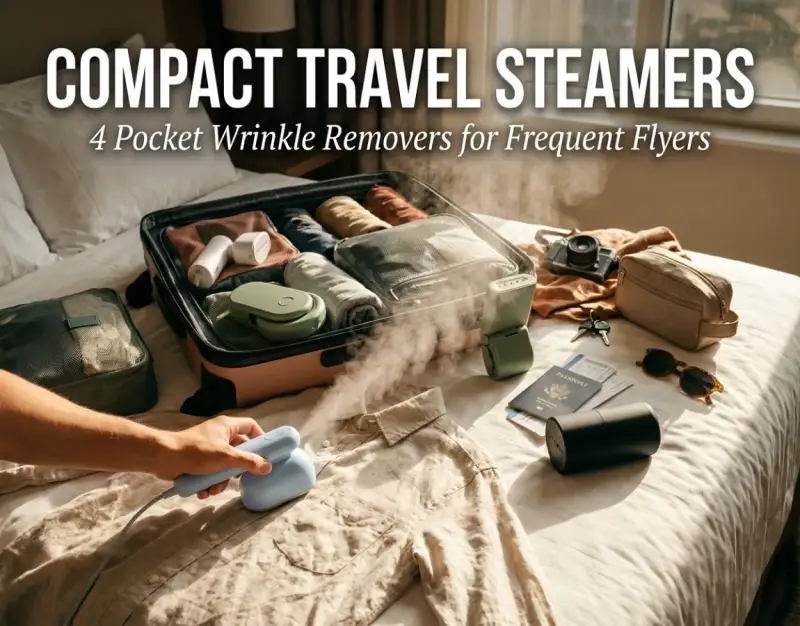
Fortunately, the landscape of modern travel tech has undergone a revolutionary shift, driven by miniaturization, advanced thermal engineering, and the rising demand for efficient everyday carry gear. The contemporary frequent flyer no longer needs to surrender precious luggage real estate to bulky, industrial-grade steamers or risk damaging garments with archaic hotel hardware. Today, the market for a compact travel steamer has evolved to deliver unprecedented thermal output in form factors that slide effortlessly into a briefcase, backpack, or even a deep jacket pocket. These engineering marvels balance ultra-portability with continuous high-pressure steam, making them indispensable packing essentials for anyone who values a polished presentation.
As remote work blends seamlessly with global mobility, looking sharp on arrival is no longer a luxury reserved for C-suite executives; it is a foundational baseline of professional competence. Whether you are prepping for a impromptu pitch meeting across the country or transitioning from a red-eye flight to a weekend wedding, mastering the art of portable garment care is paramount. In this exhaustive, master-level guide, we will deconstruct the underlying mechanics of flash-steam generation, evaluate the top pocket-sized wrinkle removers on the market, outline a foolproof step-by-step garment refreshing workflow, and reveal how integrating these tools with other smart travel gear—such as Ultra-Slim Power Banks: 4 Pocket Chargers That Won't Bulge in Your Jeans—can completely transform your mobile lifestyle.
Deconstructing the Physics of Portable Steam Generation
To truly appreciate the value of a high-performance portable clothes steamer, one must look beyond its sleek exterior and examine the thermodynamics at play. Traditional irons rely primarily on conductive heat—pressing a hot metal plate directly against fabric fibers under mechanical pressure to flatten creases. While effective on heavy canvas and thick denims, this conductive approach often crushes the natural loft of wool, creates undesirable shine marks on dark synthetics, and risks scorching delicate weaves. Steam generation, by contrast, relies on convective and latent heat transfer. When micro-droplets of water flash-boil into vapor, they release massive amounts of latent heat upon contacting fabric fibers, instantly relaxing the polymer chains within the textile without the crushing pressure of a heavy soleplate.
Engineering a device capable of executing this thermodynamic process within a pocket-sized chassis is no small feat. Traditional household steamers utilize gravity-fed reservoirs and large heating elements that require significant volume and wattage to achieve continuous output. Compact travel units, however, employ sophisticated micro-pump systems paired with rapid-heating ceramic or aluminum thermoblocks. These components force measured pulses of water through narrow, high-temperature channels, instantly converting liquid into dry, high-velocity steam within 15 to 30 seconds of activation. Understanding this internal mechanics helps explain why choosing the right device is critical: inferior units often spit boiling water droplets rather than producing dry vapor, leaving wet spots on your garments just minutes before you need to wear them.
Furthermore, frequency of travel dictates specific durability requirements for your thermal gear. Just as professionals invest in workspace ergonomics—curating clean setups much like those enhanced by a Desk Mat XXL: Why Every Modern Workspace Needs a Full-Surface Pad—travelers must curate their mobile toolkit with equal intentionality. A sub-par steamer with cheap heating coils will degrade rapidly under the mineral stress of varying international water supplies, whereas a premium travel steamer features anti-calcification flushing mechanisms, dual-voltage compatibility, and robust thermal cutoffs to prevent burnout when switching between 110V and 220V power grids abroad.
The Anatomy of a Pocket Wrinkle Remover
At the core of every reliable wrinkle remover travel gadget is an intentional balance between power consumption, water capacity, and ergonomic footprint. Because these units are designed to fit into restricted spaces, their water tanks typically range from 50ml to 100ml. While this capacity yields roughly 5 to 8 minutes of continuous steaming—more than enough for a single shirt, dress, or jacket—it requires smart user technique to maximize efficiency.
The nozzle design is another critical architectural feature. Premium pocket steamers utilize precision-mored steam ports that concentrate the vapor plume into a high-velocity jet, forcing steam deep into the weave of heavy woolens and structured linens. Look for models featuring brushed metal or non-stick soleplate attachments; these allow you to use the unit as a hybrid dry iron when dealing with stubborn, set-in creases along collars and cuffs, giving you the best of both worlds without the bulk.
Electrical safety and international compatibility round out the structural anatomy of elite travel steamers. International travelers frequently encounter varying grid frequencies and unstable hotel voltages. High-end pocket steamers incorporate automatic dual-voltage switching circuits and smart thermostatic controls that prevent overheating, ensuring that your equipment remains operational whether you are plugged into a 120V outlet in Chicago or a 240V socket in Tokyo.
Thermal Dynamics and Fabric Safety Profiles
Not all fabrics react identically to steam, and mastering your travel steamer requires a foundational understanding of textile science. Natural fibers like cotton, linen, and wool possess resilient hydrogen bonds that are easily disrupted and temporarily reformed by moisture and heat. When you apply high-velocity steam to a rumpled linen shirt, the water molecules penetrate the cellulose fibers, breaking the hydrogen bonds holding the crease in place. Gravity—assisted by a gentle downward pull on the garment hem—then resets the fibers into a smooth, unblemished alignment as they dry.
Synthetic fibers such as polyester, nylon, and acetate, however, are essentially extruded plastic polymers that soften at much lower thermal thresholds. Exposing them to unchecked, continuous high heat can cause irreversible melting, glazing, or shrinkage. This is why advanced portable clothes steamer models incorporate multi-stage temperature regulation or specialized fabric brushes that act as thermal diffusers, keeping the direct steam orifice at a safe microscopic distance from delicate synthetics while still delivering enough ambient heat to eliminate wrinkles.
Silk and cashmere demand an even more refined touch. When steaming luxury garments on the road, maintaining a distance of one to two inches and utilizing sweeping, vertical motions ensures that the delicate protein-based fibers receive adequate moisture without becoming waterlogged or thermally shocked. Investing a few moments to understand your garment's care label before initiating the steaming process will consistently yield superior, showroom-quality results.
Strategic Packing and Pre-Trip Preparation
The most effective way to manage wrinkles while traveling is to prevent them from forming in the first place through strategic packing methodologies. Even the finest compact travel steamer will struggle if your garments have been brutally compressed into an overstuffed suitcase alongside heavy footwear and hard-sided toiletries. Achieving wrinkle-free travel is an end-to-end discipline that begins long before you zip your suitcase closed, combining intelligent rolling techniques, structured folding barriers, and appropriate fabric segregation.
Begin by auditing your travel wardrobe for crease-resistant blends. Merino wool, high-twist cottons, and technical synthetic-natural hybrid fabrics possess natural memory retention that bounces back from compression far better than pure, unblended linen or lightweight poplin. When packing garments that require absolute crispness—such as business dress shirts or silk blouses—utilize the interlock rolling method rather than traditional folding. Rolling garments tightly around soft items like socks or undergarments distributes pressure evenly, preventing the sharp, hard-crease lines that folding introduces.
Equally important is the strategic placement of your travel tech and garment care accessories within your luggage matrix. Your wrinkle remover travel gadget should never be tossed loosely into the main compartment where its power cord can entangle with delicate fabrics or its water tank can be cracked by heavy items. Instead, dedicate a secure, padded side pocket or a dedicated packing cube specifically for your garment care tools and accessories, ensuring rapid deployment the moment you check into your accommodations.
The Interlock Rolling Technique vs. Traditional Folding
Traditional flat-folding creates harsh, angular crease lines that become deeply set over hours of transit pressure, especially when luggage is stacked in cargo holds. The interlock rolling technique, favored by military personnel and professional stylists alike, neutralizes this issue by eliminating sharp folds altogether. By laying garments flat, folding the sleeves inward, and rolling the piece smoothly from collar to hem, you create a cylindrical shape that absorbs external shocks and distributes weight uniformly.
When packing structured garments like suit jackets or blazers, the classic "shoulder-in-shoulder" inversion method is mandatory. By folding one shoulder inside out and tucking the other shoulder into it, you protect the internal canvas padding and lapel structure from distortion. Paired with a breathable garment bag or placed inside a smooth packing cube, this approach ensures your tailored pieces retain their architectural integrity throughout transit.
Furthermore, consider the micro-climate inside your luggage. Humidity and trapped moisture can cause musty odors to develop in rolled garments during long flights. Ensuring all clothing items are completely dry before packing, and incorporating moisture-absorbing silica packets into your packing cubes, works in tandem with your travel steamer to keep your wardrobe fresh and ready for immediate wear upon arrival.
Optimizing Your Luggage Matrix for Rapid Deployment
Time is the ultimate currency of the frequent flyer. When you arrive at your hotel room with only thirty minutes to spare before a critical dinner meeting, the last thing you want to do is unpack your entire suitcase just to locate your pressing tools. Optimizing your luggage matrix means establishing a clear hierarchy of accessibility, placing items needed immediately upon arrival at the absolute top of your pack.
Designate an external pocket or an easily accessible upper compartment of your carry-on specifically for your compact travel steamer, its power adapter, and a miniature lint brush. This modular approach allows you to walk into your hotel room, unzip a single compartment, extract your steamer, plug it into the nearest vanity outlet, and begin refreshing your outfit within sixty seconds of closing the door.
This same level of organizational precision should extend to your botanical care at home—just as keeping your living space thriving with the help of insights like Smart Plant Monitors: The Gadget That Keeps Your Indoor Houseplants Alive ensures peace of mind while you are away, maintaining an orderly travel kit ensures your professional life runs smoothly on the road without unnecessary friction.
Step-by-Step Methodology: Mastering the On-the-Go Steaming Workflow
Having the right equipment is only half the battle; executing a flawless steaming workflow requires proper technique, patience, and attention to detail. Amateurs often make the mistake of waving a steamer frantically back and forth across a crumpled shirt, achieving mediocre results while sputtering water all over the fabric. Achieving a professional, dry-cleaner-quality finish on the road is a methodical process that can be broken down into five distinct, repeatable steps.
By following a structured workflow, you maximize the thermal efficiency of your portable clothes steamer, protect your garments from heat damage, and ensure you look immaculate in a fraction of the time. Whether you are prepping a heavy wool overcoat in a freezing European capital or a lightweight linen shirt in the tropics, adhering to these fundamental steps guarantees consistent, flawless execution every single time.
- Preparation and Water Calibration: Fill your steamer's reservoir using distilled or low-mineral water whenever possible to prevent internal calcium buildup. Secure the tank tightly, plug the unit into a verified power source, and allow it to reach its optimal operating temperature (typically indicated by an LED status light shifting from flashing to solid).
- Hanging and Tensioning: Never attempt to steam a garment while it is lying flat on a bed or a desk. Hang the garment securely on a sturdy wooden or padded hanger, ideally suspended from a high anchor point such as a shower rod or a closet hook. Use your non-dominant hand to grasp the hem or cuff of the garment, pulling downward to apply gentle tension that counteracts the steam pressure.
- The Vertical Sweep Technique: Hold the steamer upright, keeping the nozzle approximately one inch away from the fabric surface. Initiate slow, deliberate vertical strokes moving from the top of the garment downward. Allow the high-velocity steam plume to saturate the fibers while your downward tension smooths out the relaxing weave.
- Detailing Collars, Cuffs, and Plackets: For structured areas requiring crisp lines—such as shirt collars, cuffs, and button plackets—utilize the built-in crease clip or press the steamer's heated soleplate gently against the fabric while holding the area taut. Avoid lingering in one spot for more than three seconds to prevent localized overheating.
- The Post-Steam Rest Period: Once steaming is complete, do not put the warm garment on immediately. Hang it in an open, well-ventilated area for three to five minutes to allow any residual moisture within the fabric fibers to evaporate completely. Wearing a damply steamed garment will instantly reintroduce wrinkles the moment you sit down.
Advanced Maneuvers for Stubborn Creases
Even with optimal technique, certain travel-induced wrinkles—such as deep suitcase folds embedded in heavy cotton twill or structured wool—will resist standard vertical steaming. When confronting these stubborn problem areas, advanced road warriors deploy targeted manipulation tactics. One highly effective method is the "hand-behind-fabric" technique: place your clean, flat hand directly behind the wrinkled area on the inside of the garment, then press the steam nozzle firmly against the exterior fabric while your hand provides a stable, heat-resistant backing surface.
Another powerful tactic is combining steam with natural tensioning clips or garment clamps. If your travel steamer includes a creasing attachment, snap it into place and pinch the fabric along natural style lines (such as trouser creases or shirt plackets) to impart a razor-sharp edge. For ultra-delicate silks, interposing a clean, thin cotton handkerchief between the steamer nozzle and the garment acts as a protective thermal buffer, diffusing the steam evenly and eliminating any risk of water spotting or fabric scorching.
Finally, pay close attention to environmental humidity in your hotel room. Steaming in an unventilated, high-humidity bathroom can actually hinder the drying phase of your garments, leaving them feeling damp and clammy. Whenever possible, steam your clothes in an open, climate-controlled bedroom space with good air circulation to accelerate the post-steam evaporation cycle.
Real-World Case Studies & Scenarios
To fully grasp the transformative impact of incorporating a high-end compact travel steamer into your everyday carry routine, let us examine two contrasting real-world travel scenarios. These case studies highlight the operational differences between relying on outdated hotel amenities versus deploying a precision-engineered pocket wrinkle remover on the road.
Scenario A: The High-Stakes Corporate Pitch (The Amateur Approach)
Marcus, a senior business development director, arrives in London for a crucial morning pitch meeting after a grueling overnight flight. Pressured for time and relying on his usual packing habits, he pulls a high-end wool-blend suit from his standard luggage, finding it deeply creased across the back and lapels. Desperate for a quick fix, he bypasses packing a portable steamer and decides to use the complimentary iron provided in the hotel room closet.
The consequences are immediate and disastrous. The hotel iron—suffering from internal mineral scale—spits a surge of rusty brown water directly onto the lapel of Marcus’s light gray suit jacket, leaving an unsightly stain. Compounding the issue, the iron's thermostat is stuck on maximum heat; when Marcus presses it against the fabric, it produces an unwanted glossy burn mark on the wool fibers. Disheveled, stressed, and forced to scramble for an emergency dry cleaner, Marcus arrives flustered and late to his meeting, severely undermining his professional presentation.
Scenario B: The Seamless Arrival (The Master Practitioner)
Elena, an international consultant and frequent flyer, faces an identical itinerary: a red-eye flight into London followed by an immediate executive briefing. However, Elena’s packing strategy incorporates professional-grade travel tech. Embedded securely in her carry-on's dedicated tech pouch is a premium compact travel steamer alongside her slim power bank and travel accessories.
Upon entering her hotel room, Elena executes her established workflow: she hangs her bespoke blazer on the bathroom door hook, fills her lightweight steamer with low-mineral water, and allows it thirty seconds to reach operating temperature. Utilizing the vertical sweep technique, she effortlessly relaxes the travel creases from her garments without applying crushing pressure or risking water spots. Within five minutes, her suit is pristine, dry, and professional. She steps out of her room calm, collected, and impeccably polished—securing the account with unshakeable confidence.
Critical Mistakes and How to Avoid Them
Even experienced travelers frequently fall victim to common pitfalls when operating portable garment care equipment. Understanding these critical missteps and implementing precise preventive countermeasures will extend the operational lifespan of your equipment and protect your wardrobe from accidental damage.
- Mistake 1: Using Untreated Tap Water in Hard Water Regions. High mineral content in hotel tap water leads to rapid calcium and scale buildup inside microscopic heating elements, causing sputtering, reduced steam output, and premature device failure. Countermeasure: Always use distilled, purified, or low-mineral bottled water whenever possible, and perform a periodic vinegar-and-water descaling flush every two to three months.
- Mistake 2: Steaming Garments While Wearing Them. In an extreme rush, some travelers attempt to steam wrinkles out of a shirt or blouse while it is actively being worn on their body. This practice invites severe thermal burns from high-velocity steam plumes and hot condensate drips. Countermeasure: Always suspend garments on a sturdy, elevated hanger and maintain a safe one-inch clearance between the steam nozzle and the fabric.
- Mistake 3: Overfilling the Water Reservoir. Pouring water past the maximum fill line leaves insufficient expansion chamber volume inside the tank, resulting in boiling water spitting directly through the nozzle rather than generating dry steam. Countermeasure: Always fill the reservoir strictly up to the designated fill indicator line and securely seal the cap before powering on the unit.
- Mistake 4: Packing the Steamer Immediately After Use. Stowing a hot steamer into a sealed packing cube or luggage compartment immediately after a session traps residual internal heat and moisture, degrading electrical components and risking mildew growth. Countermeasure: Allow the device to cool completely on an open surface for at least ten minutes before packing it away for transit.
- Mistake 5: Neglecting Fabric Compatibility Profiles. Applying high-velocity steam directly to delicate synthetic or treated waterproof fabrics without a thermal buffer can cause irreversible melting or glossing. Countermeasure: Always consult garment care labels and utilize specialized fabric brush attachments or protective cotton barriers when steaming sensitive textiles.
Comprehensive Comparison Matrix: Evaluating Travel Wrinkle Removers
To assist you in selecting the ideal device for your specific travel profile, the following semantic comparison table analyzes four distinct approaches to mobile wrinkle removal, balancing power output, portability, water capacity, and ideal use cases.
| Device Category | Form Factor & Weight | Heat-Up Time | Continuous Steam Output | Best For |
|---|---|---|---|---|
| Ultra-Compact Pocket Steamer | Pocket-friendly (< 1.0 lb) | 20–30 Seconds | 5–8 Minutes | Frequent flyers prioritizing minimalist carry-on efficiency |
| Hybrid Travel Iron-Steamer | Compact foldable (1.2–1.5 lbs) | 40–50 Seconds | 10–12 Minutes | Extended business trips requiring crisp, creased trousers |
| Standard Hotel Room Iron | Bulky, uncalibrated (3.0+ lbs) | 2–3 Minutes | Unlimited (Plumbed) | High-risk emergencies when no portable tool is available |
| Manual Wrinkle-Release Spray | Aerosol/Spray bottle (varies) | Instant (No heat) | N/A (Chemical relaxation) | Quick refreshes on casual knitwear during day-long transits |
Frequently Asked Questions (FAQ)
Can a compact travel steamer completely replace a traditional household iron?
For the vast majority of modern travel and everyday professional needs, yes. A high-performance portable clothes steamer effortlessly handles the vast majority of fabrics—including cotton, wool, silk, linen, and synthetic blends—without the risk of scorching or creating unwanted shine marks. However, if your daily wardrobe relies heavily on impeccably sharp knife-edge creases on heavy cotton dress trousers or crisp pleats on formal wear, a hybrid travel model featuring a heated soleplate may be required to achieve that exact architectural finish.
Is it safe to use tap water in my portable clothes steamer while traveling internationally?
While you technically can use tap water, it is strongly discouraged, particularly in regions known for hard water. Minerals such as calcium and magnesium dissolved in tap water will rapidly crystallize inside the compact heating channels of your device, leading to reduced steam pressure, sputtering water droplets, and eventual mechanical failure. Whenever traveling abroad, utilize bottled purified water or distilled water from local convenience stores to ensure the longevity of your equipment.
Why does my travel steamer spit water instead of producing dry steam?
Water spitting is almost always caused by one of three operational errors: overfilling the water reservoir beyond the maximum fill line, tilting the steamer at an overly aggressive angle exceeding 45 degrees from vertical, or attempting to activate the steam pump before the internal heating element has reached its full operating temperature. To eliminate spitting, ensure the tank is filled correctly, allow the unit's indicator light to signal full readiness, and maintain an upright vertical orientation during use.
How do I prevent my garments from feeling damp after steaming them in a hotel room?
Dampness occurs when steam condenses on fabric fibers and fails to evaporate adequately due to poor ambient air circulation or high room humidity. To prevent this, always allow your freshly steamed garments to rest in an open, well-ventilated area for three to five minutes before wearing or packing them. Never steam clothing in a cramped, unventilated bathroom immediately after someone has taken a hot shower, as the elevated ambient moisture will trap humidity inside the textile weave.
Are pocket-sized steamers permitted in airline carry-on luggage?
Yes, portable clothes steamers are fully permitted in both carry-on and checked luggage by the Transportation Security Administration (TSA) and international aviation authorities, provided they are completely emptied of all liquid water prior to passing through security checkpoints. To ensure a seamless security screening experience, keep your empty steamer easily accessible within your carry-on so security personnel can inspect it if requested.
Strategic Roadmap & Final Takeaway
As global mobility continues to accelerate and the boundaries between professional travel and personal exploration blur, maintaining an immaculate, polished presentation remains a definitive marker of personal standard. Relying on unpredictable hotel irons is no longer a viable strategy for the discerning frequent flyer. By integrating a high-performance compact travel steamer into your everyday carry ecosystem, you reclaim absolute control over your wardrobe, eliminate travel stress, and ensure you look effortlessly sharp the moment you step off any plane.
Looking ahead over the next two to five years, we anticipate rapid advancements in micro-thermal engineering, including solid-state flash-heating elements, ultra-lightweight titanium chassis, and solar-compatible USB-C charging integrations that will make portable garment care even more seamless. To stay ahead of the curve, audit your travel gear today, invest in professional-grade pocket technology, and embrace a streamlined workflow that guarantees you are always ready for whatever destination lies ahead.
Be the first to share a gentle reflection on this story.