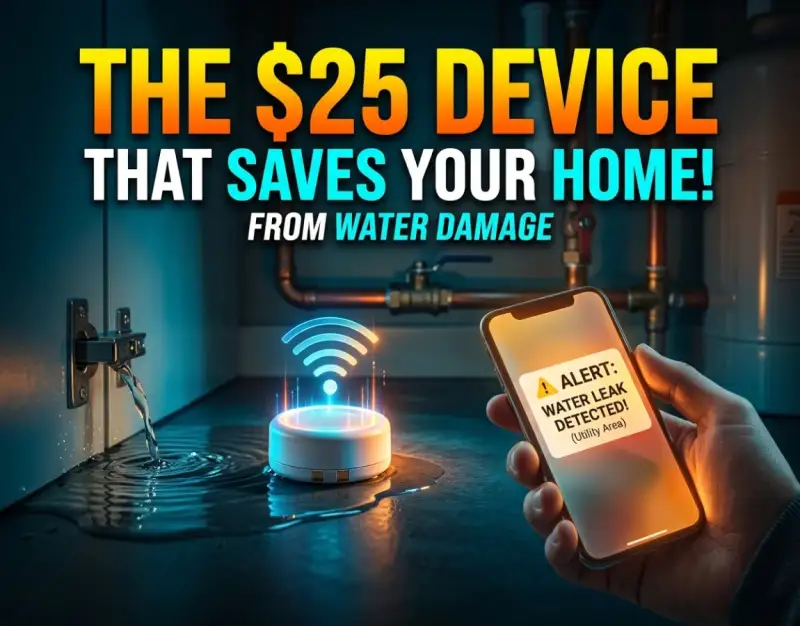
Imagine returning from a long-awaited weekend getaway, stepping through your front door, and being greeted not by the warmth of home, but by the heavy, stagnant air of absolute devastation. The engineered hardwood floors in your hallway are buckled into rolling waves of ruined timber; drywall five feet up the corridor is soft, weeping paint and crumbling at the touch; and deep within your subfloor, a slow, undetected pinhole leak in a supply line has quietly pumped hundreds of gallons of water into your home over forty-eight hours. This is not an outlier scenario reserved for Hollywood disaster films—it is the stark, everyday reality faced by millions of property owners worldwide. According to insurance industry data, water damage and freezing claims account for roughly one in every fifty homeowners insurance policies each year, costing billions in remediation, mold mitigation, and structural rebuilding.
Yet, while homeowners invest heavily in complex security systems, heavy-duty smart locks, and high-definition outdoor cameras to guard against external threats, the single most destructive domestic hazard usually lurks silently beneath their own sinks, behind their water heaters, and underneath their washing machines. The modern architectural marvel of the single-family home or multi-family apartment is a complex web of pressurized plumbing, aging rubber gaskets, and vulnerable gravity-fed drainage lines. For decades, mitigating this risk meant relying on blind luck, visual inspections, or waiting until water breached a ceiling to take action. Today, however, a quiet revolution in home automation has shifted the balance of power back to the homeowner through the advent of the affordable 10 Clever Tech Gadgets Under $30 That Fix Everyday Frustrations, chief among them being the compact, highly sensitive smart water leak detector.
The core thesis of this comprehensive guide is simple yet profound: you no longer need to spend a fortune on proprietary, hardwired plumbing shut-off systems to achieve absolute peace of mind. For roughly the cost of a casual dinner out, a network of strategically deployed, battery-operated smart water sensors can stand guard over your most vulnerable utility zones twenty-four hours a day, seven days a week. By leveraging low-power wireless protocols like Wi-Fi, Zigbee, Z-Wave, or LoRaWAN, these unassuming plastic pucks communicate instantly with your smartphone, sounding local alarms and pushing real-time push notifications the microsecond liquid bridges two gold-plated sensor probes. In this definitive guide, we will unpack the foundational engineering behind these devices, provide an exhaustive step-by-step blueprint for deploying them across your entire living space, review real-world case studies, and equip you with the exact strategies needed to safeguard your most valuable asset.
Foundational Principles & Mechanics: How Smart Leak Detectors Work
To fully appreciate the utility of a modern smart water leak detector, one must first understand the fundamental electro-mechanical physics that govern its operation. At its core, a water sensor is an open electrical circuit waiting to be closed. On the underside of the device, two or more raised metal prongs—typically plated in corrosion-resistant gold or nickel—act as terminal ends of a low-voltage circuit powered by a small coin cell or AAA battery. Under normal, dry conditions, the air between these probes acts as an insulator, and the circuit remains open. The device draws virtually zero current, allowing a single battery to endure for anywhere from one to five years on standby.
The moment a rogue droplet of water, condensation puddle, or catastrophic pipe burst makes physical contact with both probes simultaneously, the chemistry of the water—containing dissolved minerals and ions—lowers the electrical resistance between them. This creates a bridge that closes the circuit. The internal microcontroller registers an instantaneous drop in resistance, waking up the onboard wireless radio chip. Within milliseconds, the device broadcasts an alert signal to your home Wi-Fi router or smart home hub, which immediately dispatches a cloud-based notification to your smartphone, triggers smart lights to flash red, or commands a motorized water shut-off valve to slam closed.
Beyond basic conductive probing, advanced iterations of these home automation sensors incorporate secondary environmental monitoring capabilities that exponentially increase their protective value. Ambient temperature monitoring is standard across most quality models, allowing the sensor to double as a freeze detector. When ambient temperatures in a crawlspace or utility closet drop dangerously close to freezing—typically set below 35°F (1.7°C)—the sensor triggers an alert warning you of impending pipe rupture risks. Furthermore, high-end variants utilize ambient humidity tracking to spot chronic, slow-evaporating moisture problems long before visible mold or structural wood rot can take root in dark, inaccessible cavities.
Step 1: Identifying High-Risk Vulnerability Zones in Your Home
Deploying smart water leak detectors haphazardly across every square foot of your living space is inefficient and unnecessary. Instead, an effective deployment strategy requires a rigorous, room-by-room vulnerability audit of your home’s plumbing infrastructure and high-appliance load zones. Start by mapping out every single point of water entry, storage, utilization, and drainage. By categorizing these areas based on historical failure rates and potential catastrophe severity, you can prioritize your hardware budget for maximum impact.
The primary high-risk zone in almost every residential structure is the water heater enclosure. Whether located in a garage, a dedicated utility closet, or an interior attic space, tank-style water heaters have a finite lifespan averaging eight to twelve years. As glass-lined steel tanks age, internal corrosion eats through the vessel, resulting in catastrophic seam failures that can dump forty to eighty gallons of scalding water directly onto your subfloor within minutes. Placing a wide-coverage rope-style smart sensor completely encircling the base of the water heater ensures that even a weeping drain valve or slow bottom-tank rust-through is detected before it pools beyond the pan.
Secondary high-risk zones include kitchen sink bases, bathroom vanities, and laundry utility areas. Kitchen sink bases are notorious breeding grounds for hidden leaks due to the complex web of garbage disposals, flexible supply hoses, dishwasher drainage connections, and PVC traps that frequently loosen due to under-sink storage shifting. Similarly, washing machine supply hoses are subjected to constant water hammer pressure and mechanical vibration; an aging braided steel or rubber hose can balloon and burst without warning when washing cycles initiate. Placing discrete sensors directly on the floor beneath these fixtures acts as an uncompromising digital sentry.
Mapping Drainage and HVAC Condensate Risks
Do not overlook gravity-fed drainage lines and secondary mechanical systems when conducting your vulnerability assessment. High-efficiency HVAC air handlers and furnaces located in attics or upper-floor closets constantly generate condensation during cooling seasons. This moisture is captured in an auxiliary drain pan and routed outside or down a main stack via a condensate line. If this line clogs with algae, dust, or biological slime, the drain pan overflows directly into the drywall and insulation of your ceiling spaces, causing thousands of dollars in hidden structural damage before anyone notices a drip.
Positioning a compact sensor directly inside or adjacent to the auxiliary HVAC drip pan is a masterclass in proactive home security. Furthermore, consider out-of-sight locations like underfloor crawlspaces, sump pump pits, and basement floor drains. Sump pumps rely on mechanical float switches that can easily jam or lose electrical power during severe storms precisely when they are needed most. Integrating a battery-backed water sensor equipped with an extended remote probe into the upper rim of your sump pit ensures you receive an emergency alert the moment water levels rise past the failure threshold of your primary pump.
Accounting for Environmental False Positive Variables
A critical component of strategic sensor placement is understanding and mitigating environmental factors that can trigger false alarms or prevent proper operation. For instance, placing a standard flat-bottom sensor directly on a concrete basement floor that experiences seasonal dampness or rising capillary moisture will result in constant nuisance alerts and battery drain. In such environments, you must utilize elevated mounting feet or wire-lead remote probes that rest on the floor while keeping the main housing elevated and dry.
Similarly, avoid placing open-probe sensors in areas subjected to routine heavy splashing, such as immediately adjacent to a bathtub rim, inside a shower stall, or directly beneath a heavily used pet water bowl where constant minor spills are guaranteed. If you need to monitor moisture accumulation in high-splash zones, utilize smart sensors featuring adjustable sensitivity thresholds or integrate dampness-resistant damp-rated enclosures. Document the exact physical location of every sensor in a master home maintenance log or smart home app folder to streamline future battery replacements and firmware updates.
Step 2: Selecting the Right Hardware Ecosystem and Connectivity Protocol
The market for smart water sensors spans an enormous spectrum, ranging from ultra-cheap, standalone Wi-Fi pucks to sophisticated, enterprise-grade mesh network components integrated into whole-home automation systems. Selecting the correct hardware ecosystem requires balancing your existing smart home infrastructure, technical proficiency, budget constraints, and long-term reliability requirements. A mismatch in communication protocols can result in dropouts, unreliably delivered notifications, or frustrating configuration loops.
Standalone Wi-Fi leak detectors represent the most accessible entry point for everyday consumers. These devices connect directly to your home’s 2.4GHz wireless network without requiring a dedicated hardware hub. They are exceptionally easy to configure using a smartphone app, making them ideal for renters or homeowners dipping their toes into home automation for the first time. However, Wi-Fi devices suffer from notable drawbacks: they consume significantly more battery power due to constant radio polling, and if your home internet router loses power or your internet service provider experiences an outage during a severe storm—which frequently coincides with pipe bursts and flooding—your Wi-Fi sensors become completely deaf and blind.
To circumvent the reliability flaws of direct Wi-Fi connections, advanced smart home practitioners lean toward dedicated local mesh protocols such as Zigbee, Z-Wave, or Apple HomeKit over Thread. These protocols operate on dedicated radio frequencies (such as 908MHz for Z-Wave or 2.4GHz for Zigbee mesh) that do not clog your primary internet bandwidth. Because devices on a mesh network communicate with each other and route signals through local hubs or smart plugs, a single dropped router connection does not sever your home's defense grid. Furthermore, many Z-Wave and Zigbee sensors boast exceptional battery longevity, often running three to five years on a single set of AAA batteries.
Evaluating Ecosystem Integration and Automation Capabilities
When evaluating hardware options, examine how deeply the sensor integrates with your broader home automation ecosystem. A great leak detector should not merely send a push notification to your phone; it should be capable of triggering automated emergency workflows across your entire smart home. For example, if a sensor placed beneath your kitchen dishwasher detects moisture at 3:00 AM, the automation engine should immediately kill power to the dishwasher via a smart plug, flash all interior hallway lights red, sound an audible siren on your smart speakers, and shut off the main water supply valve if you have an automated motorized shut-off installed.
Consider whether you prefer closed proprietary ecosystems (such as Ring Alarm, SimpliSafe, or dedicated plumbing brands like Flo by Moen and LeakBot) or open platforms (such as Home Assistant, Hubitat, or SmartThings). Proprietary ecosystems offer seamless, plug-and-play installation and polished user interfaces, but they often lock you into their hardware lineup and subscription models. Open platforms provide limitless customization, local control without cloud dependencies, and the ability to mix and match inexpensive $25 sensors from various manufacturers into a unified, cohesive safety dashboard.
Step 3: Installation Methodologies and Physical Positioning Best Practices
Proper physical installation of your smart water leak detectors is the single most important factor determining whether a device will successfully mitigate a disaster or fail silently in the dark. Even the most technologically advanced sensor will prove utterly useless if it is placed two inches away from the actual path of pooling water or if its sensing probes are blocked by accumulated dust, pet hair, or stored items inside a cluttered cabinet.
When installing flat puck-style sensors beneath sinks, washing machines, or refrigerators, thoroughly clean the floor surface first. Dust, grease, and construction debris can create microscopic gaps between the sensor probes and the flooring substrate, preventing surface tension from drawing water across the contacts. Place the sensor at the lowest point of the natural slope in the floor or utility pan. Water follows gravity with absolute precision; use a digital leveling tool or test the floor slope with a small amount of water during your initial walkthrough to identify the exact pooling vector.
For applications where monitoring a broad linear surface area is necessary—such as along the back wall of a long basement utility room, beneath an extensive run of overhead pipes, or across a wide water heater drip pan—flat puck sensors are insufficient. For these scenarios, you must utilize rope-style water sensors or sensors equipped with external probe cable extensions. A rope sensor consists of a continuous cable that detects moisture anywhere along its entire length. You can loop these cables in intricate patterns around the base of complex machinery, weave them along the interior perimeter of drop ceilings, or drape them across joists in crawlspaces to maximize your coverage footprint.
Mounting Strategies for Vertical Surfaces and Wall Clearances
Many homeowners make the critical mistake of letting the main sensor body of a cabled unit rest directly on the floor where pooling water can submerge the entire plastic housing, shorting out the battery compartment before the wireless radio can transmit its distress signal. To prevent this, mount the main control and transmitter housing of the sensor vertically to the side of a cabinet wall, baseboard, or appliance chassis using heavy-duty hook-and-loop fasteners (such as industrial Velcro) or double-sided silicone mounting tape.
By elevating the main housing while dropping only the ultra-thin sensor probes or detection rope down to the floor level, you ensure that the sensitive electronics remain safely above the water line. This design strategy also keeps the battery hatch easily accessible for routine maintenance without requiring you to drag heavy appliances away from the wall or empty cluttered under-sink storage bins. Always leave enough slack in the sensor wire to allow for minor appliance vibrations and cleaning access.
Step 4: Integrating Motorized Smart Shut-Off Valves for Automated Defense
Detecting a water leak in real-time is an incredible triumph, but if you are currently seated at a business meeting three time zones away, sleeping soundly through a phone notification on Do Not Disturb mode, or flying on a transatlantic aircraft with no cellular reception, an alert alone will not stop your home from flooding. This is where active mitigation systems—specifically motorized smart water shut-off valves—transform your setup from a passive warning system into an active, autonomous home security fortress.
A smart water shut-off valve is an automated motorized ball valve installed directly onto your home’s main water supply line, typically positioned immediately downstream of your main water meter and pressure-reducing valve. When any smart leak detector in your home network senses moisture and broadcasts an emergency signal, the system instantly commands the motorized valve to actuate, rotating a heavy-duty internal steel ball ninety degrees to completely sever the incoming water supply within three to five seconds. This effectively caps the source of the leak, limiting total water discharge to whatever minor volume was already pressurized in the local pipe run.
When selecting and installing a main water shut-off valve, you must choose between inline professional systems and strap-on retrofit actuators. Inline systems (such as Flo by Moen, YoLink motorized valves, or Phyn Plus) must be plumbed directly into your main copper or PEX supply line by a licensed master plumber, often requiring a brief water service interruption. While more expensive upfront, these professional systems incorporate precision flow meters, pressure sensors, and sophisticated machine-learning algorithms that analyze micro-fluctuations in water pressure to detect minute pinhole leaks, running toilets, and dripping faucets without even requiring auxiliary floor sensors.
Retrofit Actuators and Localized Solenoid Valves
If plumbing modifications are prohibited by your lease agreement, HOA guidelines, or budget constraints, strap-on retrofit valve actuators offer an elegant alternative. These mechanical units clamp directly over existing quarter-turn ball valves on your main supply line or appliance supply lines without requiring you to cut or modify your piping. An electric motor drives a high-torque mechanical arm that physically cranks the existing valve handle shut when triggered by a wireless sensor signal.
For targeted appliance protection, you can also install localized automated solenoid shut-off valves specifically for high-risk appliances like washing machines or dishwashers. For example, a dedicated washing machine shut-off kit automatically closes both the hot and cold supply lines the moment its floor sensor detects moisture or when the washing machine cycle completes, eliminating continuous water pressure on aging supply hoses while you are away from home. This layered approach ensures that even if a main shut-off valve is cost-prohibitive, your most dangerous appliance threats are individually neutralized.
Step 5: Routine Testing, Maintenance, and Battery Lifecycle Management
Installing smart home sensors is not a "set-it-and-forget-it" home improvement project. Because these safety devices sit dormant for months or years at a time waiting for a catastrophic event, they are uniquely susceptible to silent failure. Dust accumulation, battery degradation, radio frequency interference, or accidental disconnection from your home network can render a sensor defunct without leaving any obvious visual indication on the exterior housing.
Establish a rigorous quarterly maintenance schedule to test every single water leak detector in your home network. Testing protocol is remarkably straightforward: use a small, damp washcloth or paper towel and press it firmly across the metal sensor probes on the underside of the device. Within three to five seconds, you should hear a local audible alarm chirp and receive an instant test notification on your smartphone app. If the device fails to respond within ten seconds, immediately check the battery voltage levels and verify its wireless connection status.
Battery management is the absolute lifeblood of any wireless sensor grid. Even low-power protocols drain batteries over extended periods, and chemical degradation inside coin-cell or alkaline batteries can lead to acid leakage that permanently destroys the circuit board. Maintain a strict proactive replacement schedule—replace alkaline batteries annually and lithium coin cells every two years, regardless of reported percentage levels in your app. Never mix old and new batteries in multi-cell devices, as voltage imbalances can cause rapid discharge and electronic failure.
Establishing Network Health Checks and Firmware Protocols
In addition to physical hardware testing, monitor the software health of your smart home network on a monthly basis. Modern smart home ecosystems often feature health dashboards that highlight offline devices, weak signal strengths, or outdated firmware versions. A sensor buried deep inside a metal kitchen cabinet or behind a concrete washing machine enclosure may experience intermittent radio dropouts due to structural signal attenuation.
If you notice a sensor frequently falling offline, introduce a wireless repeater or smart plug acting as a signal router midway between your hub and the problem zone. Furthermore, keep your hub and sensor firmware updated to the latest manufacturer releases to patch security vulnerabilities and improve wireless transmission efficiency. Treat your leak detection grid with the same operational rigor that commercial enterprises apply to fire suppression systems—because when a pipe bursts at 2:00 AM, your entire home's structural integrity depends on it functioning flawlessly.
Real-World Case Studies & Scenarios: Success vs. Catastrophe
To truly grasp the value proposition of smart water leak detectors, examine two contrasting real-world case studies drawn from residential property management data. These scenarios illustrate the profound financial and emotional divergence between a well-architected automated defense strategy and complete reliance on traditional passive observation.
Scenario A: The Silent Washing Machine Hose Failure
In a suburban single-family home in Ohio, a five-year-old braided steel washing machine supply hose developed a microscopic internal rubber rupture. The homeowner had deployed a $25 Zigbee smart water sensor beneath the washing machine and integrated it with an automated motorized main water shut-off valve. At 11:14 PM on a Tuesday, while the family slept, the hose finally ballooned and split open, releasing pressurized water at four gallons per minute.
Within four seconds of water pooling on the utility room floor, the sensor bridged its contacts, broadcasted an emergency mesh signal to the home hub, and triggered the main water shut-off valve. The valve slammed shut at 11:14:04 PM. Total water volume discharged into the room was less than one gallon—easily wiped up with a single bath towel. Total property damage: $0. Total remediation cost: $0.
Scenario B: The Unmonitored Kitchen Drain Leak
In an identical suburban home three blocks away, a loose PVC slip-joint nut beneath the kitchen sink began weeping a slow, intermittent drip every time the upstairs dishwasher ran its rinse cycle. The homeowner owned no smart sensors, relying entirely on visual inspection. Because the cabinet was tightly packed with cleaning supplies and trash cans, the accumulating puddle went completely unnoticed for three weeks.
By the time a foul, musty odor prompted an investigation, water had saturated the particleboard cabinet base, wicked down into the oak subfloor, and migrated across the kitchen floor joists into the dining room drywall. The remediation required tearing out the entire kitchen island cabinetry, replacing two rooms of waterlogged subflooring, treating extensive mold colonies, and rebuilding structural framing. Total insurance claim payout: $34,500, alongside a four-month displacement during reconstruction.
The lesson from these contrasting outcomes is absolute: water damage is entirely non-linear in its cost scaling. A single ounce of water caught immediately by an inexpensive sensor costs nothing; fifty gallons of water left unchecked for a week destroys an entire home. Investing in home automation sensors is not an optional luxury tech upgrade—it is essential risk management.
Critical Mistakes & How to Avoid Them
Even seasoned tech enthusiasts make critical errors when implementing smart water leak detection systems. Avoiding these five common pitfalls will ensure your home defense grid operates with maximum reliability when disaster strikes.
- Relying Exclusively on Wi-Fi Without Local Redundancy: Using cheap, standalone Wi-Fi sensors that drop connection when your internet service provider fails during a severe storm leaves you blind when you need protection most. Countermeasure: Prioritize local mesh protocols (Zigbee, Z-Wave, Thread) routed through a battery-backed central smart home hub.
- Improper Physical Placement and Floor Pooling Miscalculation: Placing flat sensors on high spots, on unsloped floors, or inside cluttered cabinets away from natural drainage vectors. Countermeasure: Conduct a water slope test during installation and utilize extended rope-style sensors to wrap completely around high-risk appliance perimeters.
- Submerging Main Electronics Housings: Letting the primary plastic casing and battery compartment of a cabled sensor rest flat on the floor where rising water shorts the circuit board before a signal can transmit. Countermeasure: Use heavy-duty mounting tape to secure the main transmitter housing vertically to a wall or baseboard, dropping only the probe wires to the floor.
- Neglecting Battery Lifecycle and Quarterly Testing Protocols: Treating sensors as permanent installations and failing to test or replace aging alkaline and coin-cell batteries. Countermeasure: Establish a strict calendar reminder to replace batteries annually and perform physical damp-cloth testing every three months.
- Failing to Integrate Active Shut-Off Capabilities: Relying solely on push notifications while away from home, ensuring that an alert goes unheeded until extensive flooding has already occurred. Countermeasure: Pair your sensor network with a motorized main water shut-off valve to achieve fully autonomous, instantaneous emergency mitigation.
Comprehensive Comparison Table: Leak Detection Approaches
To assist you in selecting the ideal hardware configuration for your specific living situation, the following semantic comparison table evaluates four distinct leak detection approaches across key operational metrics:
| Detection Approach | Average Cost | Connectivity Protocol | Active Mitigation | Reliability Rating |
|---|---|---|---|---|
| Standalone Wi-Fi Pucks | $20 – $30 per unit | Direct 2.4GHz Wi-Fi | Passive (Alert Only) | Moderate (Internet Dependent) |
| Mesh Hub Sensors (Zigbee/Z-Wave) | $15 – $25 per unit | Local Mesh Radio | Active (via Hub Automations) | High (Local Network Control) |
| Smart Plumbing Systems (Moen/Phyn) | $300 – $600 + Install | Wi-Fi + Local App | Active (Integrated Motor Valve) | Maximum (Whole-Home Flow Analysis) |
| Retrofit Valve Actuators | $100 – $150 | Zigbee / Z-Wave / Wi-Fi | Active (Mechanical Override) | High (Universal Compatibility) |
When designing your home safety setup, remember that you do not need to choose just one approach. Many homeowners successfully combine inexpensive mesh puck sensors under sinks and toilets with a robust retrofit actuator or professional main valve on the primary service line, achieving maximum coverage without breaking the bank.
Frequently Asked Questions (FAQ)
Do smart water leak detectors require professional plumbing installation?
No. The vast majority of smart water leak detectors—including compact puck-style sensors and cabled rope detectors—are entirely wireless, battery-operated devices that require zero plumbing modification. You simply unpack the device, pull the battery insulation tab, place it on the floor in your target vulnerability zone, and pair it with your smartphone app or home automation hub in under five minutes. Professional plumbing installation is only required if you choose to install an inline motorized smart water shut-off valve directly into your home's main copper or PEX supply line.
What happens to my smart leak detectors if my home loses internet or power?
This depends entirely on the communication protocol your system utilizes. Standalone Wi-Fi sensors require an active internet connection and functioning home Wi-Fi router to transmit push notifications; if your power or internet drops during a severe storm, they will sound their local internal audible alarm (if equipped) but may fail to alert your smartphone remotely. Conversely, systems utilizing local mesh protocols like Zigbee or Z-Wave, paired with a battery-backed smart home hub, continue running local automations, sounding sirens, and triggering local shut-off valves even during total wide-scale power and internet blackouts.
How long do the batteries last in these sensors, and how will I know when to change them?
Battery longevity varies based on wireless communication frequency and sensor brand, but most quality home automation sensors yield anywhere from one to three years of continuous standby operation on a standard set of AAA batteries or a high-capacity coin cell. Your smart home app or connected hub monitors battery voltage in real-time, pushing low-battery warning notifications weeks before power is depleted. For optimal reliability, we strongly recommend establishing a proactive maintenance schedule to replace all sensor batteries annually, regardless of reported app status.
Can I use smart water sensors if I live in a rental apartment or condo?
Absolutely. In fact, smart leak detectors are among the most valuable gadget investments a renter can make. Because these devices are completely non-invasive, require no screws, drilling, or plumbing modifications, and can be picked up and packed into a suitcase in seconds when you move, they provide absolute protection without violating lease agreements or risking security deposits. Placing a few inexpensive sensors beneath your rental kitchen sink, bathroom vanity, and washing machine can save you from catastrophic liability disputes with property landlords if an aging fixture fails.
Will normal household humidity or floor cleaning trigger false alarms?
Quality smart water leak detectors are engineered with intelligent threshold tuning to distinguish between normal ambient humidity, routine damp floor mopping, and actual pooling leak events. Standard flat-bottom puck sensors require a continuous water bridge between both raised metal prongs to close the circuit, meaning fleeting moisture, steam from a hot shower, or high basement humidity will not trigger a false alarm. However, if you place sensors in areas prone to routine puddling—such as unsealed concrete basement floors—you should utilize elevated mounting feet or wire-lead remote probes to keep the main housing dry.
Strategic Roadmap & Final Takeaway
As residential architecture continues to evolve over the next two to five years, the integration of ambient environmental sensing into standard home infrastructure will transition from an enthusiast niche into an absolute building code requirement. Insurance carriers are already beginning to incentivize smart water monitoring by offering substantial annual premium discounts—often ranging from 5% to 15%—for homeowners who install certified smart water shut-off systems and sensor networks. By taking control of your home’s plumbing vulnerabilities today, you are not merely purchasing a gadget; you are permanently mitigating one of the most statistically devastating hazards known to residential property ownership.
Your immediate strategic action plan is crystal clear: conduct your room-by-room vulnerability audit this weekend, map out your high-risk zones around water heaters, washing machines, and sink bases, and deploy a robust network of reliable smart water sensors. Pair these sensors with automated local alerting and, if budget permits, an automated shut-off valve. Whether you are expanding your smart home ecosystem or simply picking up a few clever devices, the peace of mind that comes from knowing your home is actively guarded against silent water destruction is an investment that pays for itself the very first time a rogue droplet hits the floor.
Be the first to share a gentle reflection on this story.