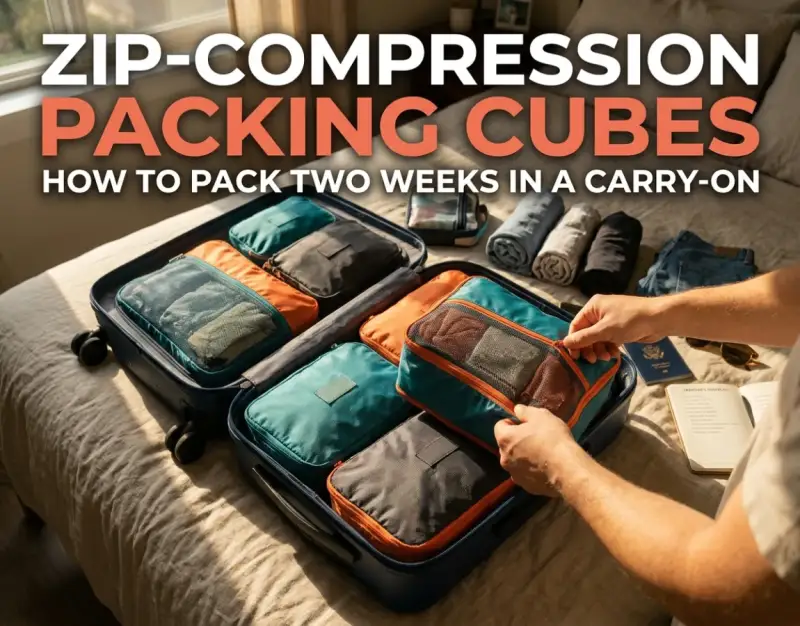
The modern era of hyper-connected global mobility has fundamentally shifted how we view baggage handling fees, airport security queues, and turnaround times. Gone are the days when checking multiple oversized suitcases was a standard and accepted travel ritual. Today, the savvy global nomad, the high-flying executive, and the leisure traveler alike recognize that checking luggage is a liability—a vector for lost items, delayed flights, and unnecessary transit stress. Yet, squeezing a full fortnight of clothing, footwear, and essentials into a single overhead compartment has long felt like an exercise in geometric impossibility.
Enter the true paradigm shift in modern transit accessories: compression packing cubes. These aren't merely cloth pouches or generic travel organizer bags; they are engineered compression systems designed to exploit the physics of air displacement and fabric consolidation. By systematically extracting trapped interstitial air from your garments, these high-performance luggage space saver tools allow you to compress bulky items down to a fraction of their original volume. Whether you are prepping for a boardroom presentation in Tokyo or a two-week exploration of European cobblestone streets, mastering these tools is your key to unlocking truly friction-free travel.
Achieving the elusive "two weeks in a carry-on" threshold requires more than just high-grade gear; it demands a rigorous operational methodology. In this exhaustive, master-level guide, we will deconstruct the mechanics of compression technology, walk you through a step-by-step modular packing blueprint, analyze real-world case studies, and expose the subtle tactical errors that ruin even the best-laid packing plans. Prepare to rethink your entire relationship with travel gear and discover how to travel lighter, faster, and smarter than ever before.
Foundational Principles: The Physics and Mechanics of Compression
To truly master the art of the pack light carry on strategy, one must first understand what occurs at a molecular and structural level when clothing is stored. Traditional packing relies on stacking or haphazardly tossing garments into a suitcase, leaving massive pockets of dead air between folds. This wasted cubic volume is the primary enemy of efficient packing. Compression packing cubes combat this by utilizing high-tensile ripstop nylon fabrics, reinforced webbing, and dual-zipper mechanisms that actively crush loft and expel air.
There are two primary styles of compression cubes dominating the market today: buckle-and-strap compression systems and dual-zipper zip-compression systems. While strap-based models apply external pressure, zip-compression cubes feature a secondary perimeter zipper that pulls the front and back panels together, mechanically forcing air out through breathable mesh panels or tightly woven synthetic weaves. This creates a rigid, brick-like module that stacks cleanly within your carry-on shell, maximizing every millimeter of available interior dimensions.
Furthermore, integrating these organization tools into your travel routine aligns with a broader philosophy of functional minimalism. Much like how enthusiasts streamline their desk setups—perhaps by pairing their workspace with Custom Coiled Aviator Cables: The Aesthetic Upgrade Your Mechanical Keyboard Needs to eliminate desk clutter—utilizing structured packing cubes eliminates chaos inside your luggage. It transforms your suitcase from a disorganized black hole into a modular, highly accessible filing cabinet system where every single item has a designated, optimized home.
Phase One: Auditing, Capsule Wardrobes, and Material Selection
The Art of the 5-4-3-2-1 Capsule Wardrobe Rule
The foundation of packing two weeks of clothing into a carry-on is not found inside the suitcase; it is determined weeks prior during the wardrobe curation phase. Attempting to pack fourteen unique, standalone outfits is a mathematical impossibility. Instead, you must embrace the capsule wardrobe methodology, specifically tailored around a rigorous 5-4-3-2-1 numerical framework for a fourteen-day journey: 5 socks and pairs of underwear, 4 tops, 3 bottoms (including trousers, skirts, or technical travel pants), 2 shoes, and 1 versatile outer layer.
Crucially, this baseline assumes access to basic laundering facilities or sink-washing protocols on day seven. By selecting neutral, highly cohesive color palettes where every top pairs effortlessly with every bottom, your mathematical permutation of outfits explodes from five to over a dozen distinct combinations. Every single garment included must earn its place through extreme versatility, quick-drying synthetic-merino blends, or wrinkle-resistant weaves that bounce back instantly from deep compression.
Textile Engineering and Fabric Selection for Compression
Not all fabrics react equally to high-pressure compression packing cubes. Heavy 100% cotton garments, traditional denim, and thick wool sweaters retain deep crease lines and resist air expulsion, making them poor candidates for heavy compression. Conversely, technical merino wool, ultra-fine modal, synthetic polyester-spandex blends, and wrinkle-resistant technical linens thrive under mechanical pressure. Merino wool, in particular, possesses natural odor-resistant properties, allowing you to re-wear shirts multiple times without offensive odors, drastically reducing the total volume of clothing required.
When selecting your travel wardrobe, prioritize weight-to-warmth ratios and compressibility ratings. Technical travel garments fold flat and conform to the interior contour of your compression cubes, ensuring that when the secondary zipper is engaged, the fabric collapses uniformly. Avoid bulky hardware, oversized decorative buttons, or rigid appliques that can puncture delicate mesh panels or create painful pressure points against your back when carrying hybrid travel backpacks.
Phase Two: The Roll vs. Fold Debate and Modular Sorting
The Ergonomics of Military Rolling vs. Flat Bundling
Once your wardrobe is curated, the physical act of loading your travel organizer bags begins with choosing the correct internal folding methodology. For zip-compression cubes, the military roll—a tightly executed cylindrical technique popularized by armed forces worldwide—is generally superior to traditional flat folding. Rolling eliminates sharp creases, distributes fabric tension evenly, and allows cylindrical rolls to pack edge-to-edge inside a cube with zero interstitial dead space.
However, delicate items such as lightweight dress shirts, formal blouses, or structured blazers require a modified flat-folding or interlocking fold technique to prevent unsightly wrinkles. When placing rolled items into a zip-compression cube, pack them tightly in neat rows until the cube is roughly eighty percent full. This leaves just enough structural leeway to press the contents down evenly before engaging the secondary perimeter zipper, preventing fabric strain and zipper derailment.
Categorization and Color-Coding Your Packing Cubes
A disorganized suitcase rendered compact is simply a compressed mess. To maintain sanity during a two-week trip, your compression system must rely on strict categorization. Allocate specific cubes for specific garment classes: a large cube for bottoms and heavy layers, a medium cube for tops and shirts, and a small cube for undergarments and socks. Many veteran travelers utilize color-coded cubes or transparent mesh-top designs to instantly identify contents without unzipping every bag in a hotel room.
This systematic approach mirrors the meticulous organization found in other high-performance gear collections. For instance, just as tech enthusiasts carefully curate and select 10 Minimalist EDC Gadgets That Make Incredible Stocking Stuffers to maximize utility while maintaining a tiny physical footprint, your travel wardrobe must be treated as an integrated ecosystem where every ounce and cubic inch is accounted for and optimized.
Phase Three: Strategic Luggage Architecture and Tetris Loading
Mapping the Interior Dimensions of Your Carry-On Shell
Packing a carry-on efficiently is an exercise in three-dimensional spatial puzzle-solving. Before placing a single compression cube inside your suitcase, you must map the interior dimensions of your luggage shell, taking into account intrusive telescopic handle bars, wheel housings, and internal frame ribs. Hard-sided suitcases feature two equal clamshell halves, whereas soft-sided bags often feature a deep main compartment with lid pockets.
Your goal is to create a flat, load-bearing foundation at the bottom of the case. Lay your heaviest, most densely compressed cubes—typically containing pants, heavy shorts, and shoes (if packed inside protective dust bags)—directly over the wheel housing and handle tracks. This levels out the uneven floor of the suitcase, creating a stable platform for subsequent lighter layers and ensuring your luggage rolls or carries balanced without shifting weight dynamically in transit.
Interlocking, Bridging, and Dead-Space Elimination
Once your primary compression cubes are fully zipped down and reduced in height, place them vertically or horizontally inside the luggage shell like architectural bricks. Rather than stacking them haphazardly, interlock their corners to bridge gaps. Any remaining peripheral gaps—such as the corners near the suitcase hinges or the spaces alongside the handle channels—should be utilized for irregular or pliable items.
Soft items such as rolled socks, charging cables, undergarments, or a microfiber travel towel make exceptional "spackle" items. Stuff these soft textiles into the awkward marginal gaps surrounding your main packing cubes. This prevents your primary cubes from shifting during turbulent flights or rough cobblestone walks, ensuring your carefully balanced load remains structurally secure from your front door all the way to your final destination hotel room.
Phase Four: Footwear Optimization and Toiletries Management
The Two-Shoe Rule and Proper Footwear Packing
Footwear represents the single greatest threat to carry-on space economy. Bulky sneakers, heavy hiking boots, and thick-soled dress shoes consume massive amounts of internal volume and add disproportionate weight. To survive a two-week trip out of a carry-on, you must strictly adhere to the two-shoe rule: wear your bulkiest, heaviest pair of shoes (typically your walking shoes or boots) during transit, and pack a single, highly versatile, ultra-lightweight secondary pair (such as minimalist slip-on flats, sandals, or packable dress shoes) inside your luggage.
When packing your secondary footwear, never waste the interior cavity of the shoes. Stuff socks, underwear, small electronics, or rolled belts directly into the toe box of each shoe. Next, place each shoe inside an individual waterproof nylon shoe bag or shower cap to isolate dirty soles from your clean clothing. Position these shoe bundles along the spine or hinges of the suitcase to act as structural bumpers that protect your garments from crushing forces.
Solid Toiletries, TSA Compliance, and Space-Saving Kits
Liquid volume limits and bulky toiletry bags can instantly derail an otherwise immaculate packing strategy. Ditch oversized, rigid cosmetic cases in favor of flexible, ultra-slim TPU clear-front toiletry pouches that conform to the contours of your suitcase lid or exterior pockets. More importantly, pivot away from liquid-heavy formulations wherever possible by embracing solid travel toiletries.
Solid shampoo bars, solid conditioner bars, toothpaste tablets, and concentrated deodorant sticks eliminate TSA liquid restrictions, remove the risk of messy mid-flight cabin explosions, and weigh a fraction of their liquid counterparts. If you must carry liquid skincare or grooming products, decant them into professional-grade silicone travel bottles sized precisely to your daily usage needs for a fourteen-day window, rather than carrying giant multi-ounce containers.
Phase Five: Mid-Trip Laundry Protocols and On-the-Road Maintenance
Sink-Washing Strategies for Extended Travel
Packing for fourteen days inside a thirty-liter or forty-liter carry-on does not mean you are carrying fourteen distinct sets of underwear and shirts. It relies entirely on executing one or two quick mid-trip laundry cycles. By committing to a simple ten-minute sink-washing protocol on day four and day nine, you can effortlessly reset your clothing inventory, effectively cutting your clothing volume requirements in half.
Pack a portable, highly flexible travel clothesline, a flat universal sink stopper, and a small, TSA-approved squeeze bottle of concentrated travel laundry detergent sheets or eco-friendly wash concentrate. In the evening, fill your hotel sink with lukewarm water, dissolve your detergent sheet, agitate your worn merino wool shirts and undergarments, let them soak for ten minutes, rinse thoroughly, and roll them tightly inside a clean hotel towel to extract excess moisture before hanging them up to air dry overnight.
Managing Dirty Laundry Separation On the Fly
One of the most common psychological barriers to light travel is the anxiety of mixing soiled, worn garments with fresh, clean clothing inside a compact carry-on. To prevent cross-contamination and odor migration, your packing system must include a dedicated, moisture-resistant laundry bag or a dual-compartment expansion cube.
As your trip progresses and clean clothes are worn, transfer the soiled garments directly into your designated laundry pouch. Modern compression packing cubes often feature double-sided compartments specifically engineered for this purpose—allowing you to store clean clothes on one side and expand the dirty side as the trip advances. This ensures your suitcase remains organized, fresh-smelling, and structurally balanced all the way through your return flight home.
Real-World Case Studies & Scenarios
To understand the tangible difference between chaotic packing and disciplined compression system execution, consider two distinct traveler profiles embarking on identical fourteen-day European itineraries involving budget European airlines with strict weight and dimension limits.
Scenario A: The Traditional Over-Packer
Traveler A packs a standard hard-shell checked bag plus a massive duffel bag carry-on, tossing in fourteen distinct outfits, three pairs of heavy shoes, full-sized liquid toiletries, and loose clothing items without organization tools. The immediate result? Traveler A is hit with a severe overweight luggage fee at the check-in counter, struggles to lift their heavy bags onto regional trains, loses multiple clothing items in hotel rooms due to disorganized piles, and wastes precious vacation time waiting at baggage carousels upon landing.
Scenario B: The Zip-Compression Tactician
Traveler B utilizes a single 35L carry-on backpack outfitted with a set of high-performance zip-compression packing cubes, adhering to the 5-4-3-2-1 capsule wardrobe rule, wearing their heavy boots in transit, and packing solid toiletries. The result is transformative: Traveler B bypasses check-in lines entirely, walks briskly through airport security, stows their bag effortlessly in the overhead bin, transitions seamlessly across cobblestone streets and subway turnstiles, executes two quick sink-washes mid-trip, and returns home with unused space in their bag.
This stark contrast highlights an essential truth of modern mobility: mastering your travel gear is not merely about physical convenience—it fundamentally elevates the entire quality of your travel experience, transforming transit from a stressful hurdle into an effortless, fluid journey.
Critical Mistakes and How to Avoid Them
Even seasoned travelers occasionally fall victim to common pitfalls when transitioning to high-efficiency compression systems. Avoiding these five critical errors will ensure your packing strategy never fails when you need it most.
- Overstuffing Cubes Beyond Structural Capacity: Forcing a compression cube to hold more than its volumetric limit places extreme stress on the teeth of the secondary zipper. Always fill cubes to roughly eighty percent before attempting to zip down the compression perimeter.
- Neglecting Weight Distribution Limits: Compressing clothing reduces volume, but it does not reduce weight. Packing all heavy denim and shoes into one side of a carry-on creates an unbalanced bag that strains your shoulders and topples over constantly.
- Failing to Account for Fabric Wrinkling: Compressing delicate dress shirts or structured linens under heavy pressure creates permanent crease lines. Reserve compression cubes for knits, synthetics, and rolled items; pack formal garments flat or in dedicated garment sleeves.
- Ignoring Weather and Climate Variances: Assuming a single lightweight wardrobe formula works universally without checking destination climate forecasts leads to severe under-dressing. Always verify local weather patterns and pack one packable wind- or waterproof shell.
- Overlooking Tech and Accessory Clutter: While clothing is neatly compressed, loose chargers, adapters, and loose items create interior chaos. Always pair your clothing cubes with a dedicated tech organizer pouch—an upgrade that pairs brilliantly if you have already integrated Bluetooth Audio Receivers: How to Turn Any Vintage Speaker Into a Wireless Sound System into your travel or home entertainment kit.
Comprehensive Packing Method Comparison
To evaluate the objective efficiency of various luggage organization strategies, examine the comparative metrics outlined in the semantic data table below:
| Packing Method | Volume Efficiency | Wrinkle Prevention | Organization Level | Carry-On Compliance |
|---|---|---|---|---|
| Traditional Loose Packing | Low (Massive air gaps) | Moderate | Poor (Total chaos) | Difficult (Requires oversized bags) |
| Standard Non-Compressing Cubes | Moderate | High | Excellent | Moderate |
| Vacuum-Seal Roll-Up Bags | Maximum | Poor (Severe creasing) | Moderate | High |
| Zip-Compression Packing Cubes | Very High (Up to 60% space savings) | High (When paired with rolling) | Superior | Exceptional (Easily fits 30L-40L shells) |
Frequently Asked Questions
Do zip-compression packing cubes actually create more physical space inside luggage?
Yes and no. They do not magically alter the laws of physics or increase the physical cubic capacity of your luggage shell. Instead, they radically optimize the space you *do* have by expelling trapped interstitial air from soft garments and consolidating loose piles into rigid, geometric modules. This eliminates wasted dead air pockets, allowing you to fit significantly more items into the exact same physical footprint.
Will compressing my clothes cause severe, permanent wrinkling?
It depends entirely on the fabrics you select and your folding technique. Heavy cottons and structured linens will indeed wrinkle severely when subjected to high-pressure compression. However, if you curate your wardrobe around technical synthetic blends, merino wool, modal, and utilize the military rolling method rather than hard folding, your garments will emerge remarkably smooth and ready to wear with minimal fuss.
How many compression cubes do I actually need for a two-week trip?
For a standard two-week trip executed out of a single carry-on, the ideal kit consists of three to four targeted cubes: one large cube for pants and heavy layers, one medium cube for shirts and tops, one small cube for undergarments and socks, and optionally a slim electronics or laundry compartment bag. Avoid buying massive multi-piece mega-sets that exceed the total internal volume of your suitcase.
Can I use compression packing cubes in checked luggage as well?
Absolutely. While they are indispensable for carry-on travelers looking to bypass checked bag fees, compression cubes are equally transformative inside large checked suitcases. They prevent your belongings from shifting, sliding, and getting crushed during rough baggage transit, and they make unpacking at your final destination hotel room take literally thirty seconds.
How do I clean and maintain my zip-compression packing cubes?
High-end travel organizer bags are typically constructed from durable ripstop nylon with water-resistant coatings. To maintain their integrity, avoid throwing them into aggressive washing machine cycles or tumble dryers, which can warp the zipper teeth and degrade synthetic coatings. Instead, spot-clean them with mild soap and warm water, or hand wash them gently and hang them up to air dry completely in the shade.
Strategic Roadmap & Final Takeaway
As we look forward to the next two to five years of global travel, airline carry-on regulations are tightening, baggage fees are climbing, and modern travelers are increasingly valuing mobility, speed, and autonomy over heavy, cumbersome luggage. The days of dragging massive, overstuffed suitcases across international airports are rapidly fading into obsolescence, replaced by an agile, minimalist ethos rooted in smart gear engineering.
Your immediate tactical next step is clear: audit your current travel gear, invest in a premium set of zip-compression packing cubes, curate a cohesive capsule wardrobe using the 5-4-3-2-1 rule, and practice your modular packing layout before your next departure date. By combining high-performance travel organizer bags with disciplined packing methodologies, you will permanently banish luggage stress, bypass baggage carousels, and unlock the ultimate freedom of traveling the world for two full weeks with nothing more than a sleek, agile carry-on.
Be the first to share a gentle reflection on this story.