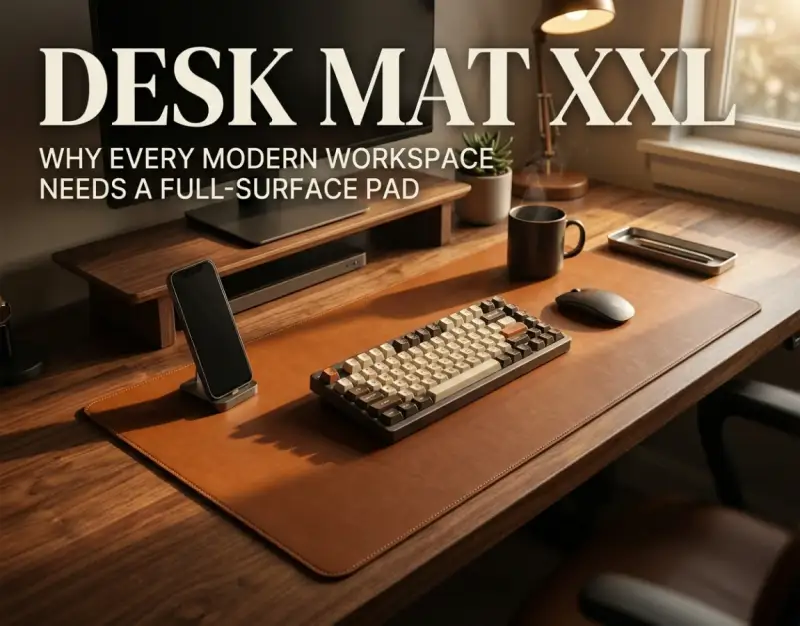
The modern workspace has undergone a seismic shift over the past half-decade. As professional lives increasingly intersect with digital workflows, remote work configurations, and prolonged desk hours, the physical architecture of our work environment requires radical re-evaluation. For years, the conversation around desktop ergonomics centered almost exclusively on mechanical keyboards, vertical mice, and height-adjustable standing desks. Yet, a fundamental surface-level component was largely overlooked: the barren, abrasive desktop itself. Hardwood veneers, cold glass, and compressed particleboard create a hostile acoustic and tactile interface for daily computer interaction, leading to micro-vibrations, wrist fatigue, and premature wear on high-end peripherals.
Enter the XXL desk mat—a deceptively simple yet transformative desktop accessory that has quietly become the cornerstone of contemporary interior design and ergonomic optimization. Far more than just an oversized mouse pad, a full-surface desk pad acts as the foundational textile layer of your productivity sanctuary. Whether you are building a serene, distraction-free environment utilizing a Smart Plant Monitors: The Gadget That Keeps Your Indoor Houseplants Alive aesthetic or curating a high-performance battlestation, deploying a comprehensive desk pad alters the acoustic resonance, tactile comfort, and visual cohesion of your entire room. It bridges the gap between raw hardware and human comfort, shielding your furniture while elevating your day-to-day tactile engagement.
As investigative journalists and workspace researchers, we dove deep into the ergonomics, material science, and psychological impacts
Be the first to share a gentle reflection on this story.